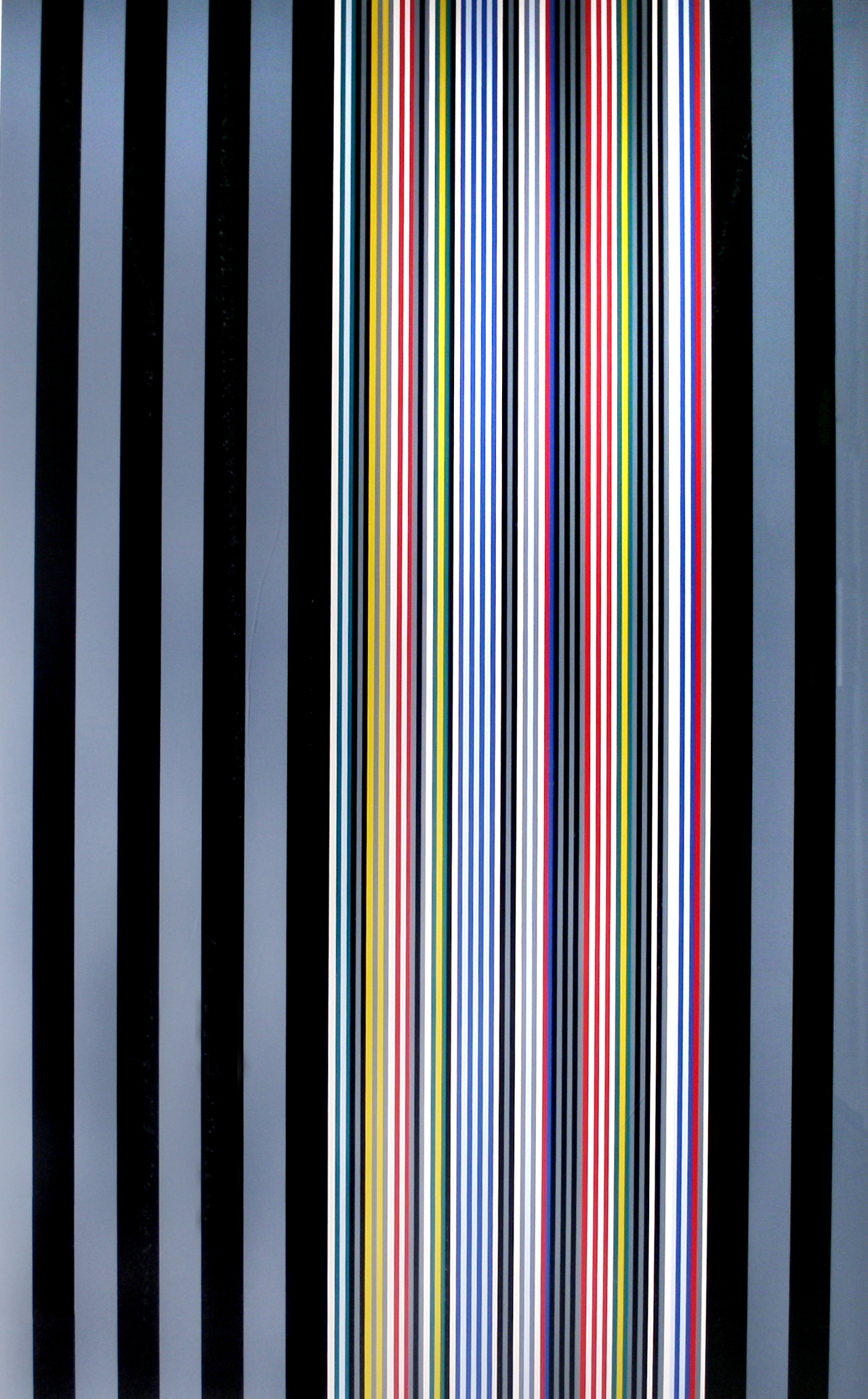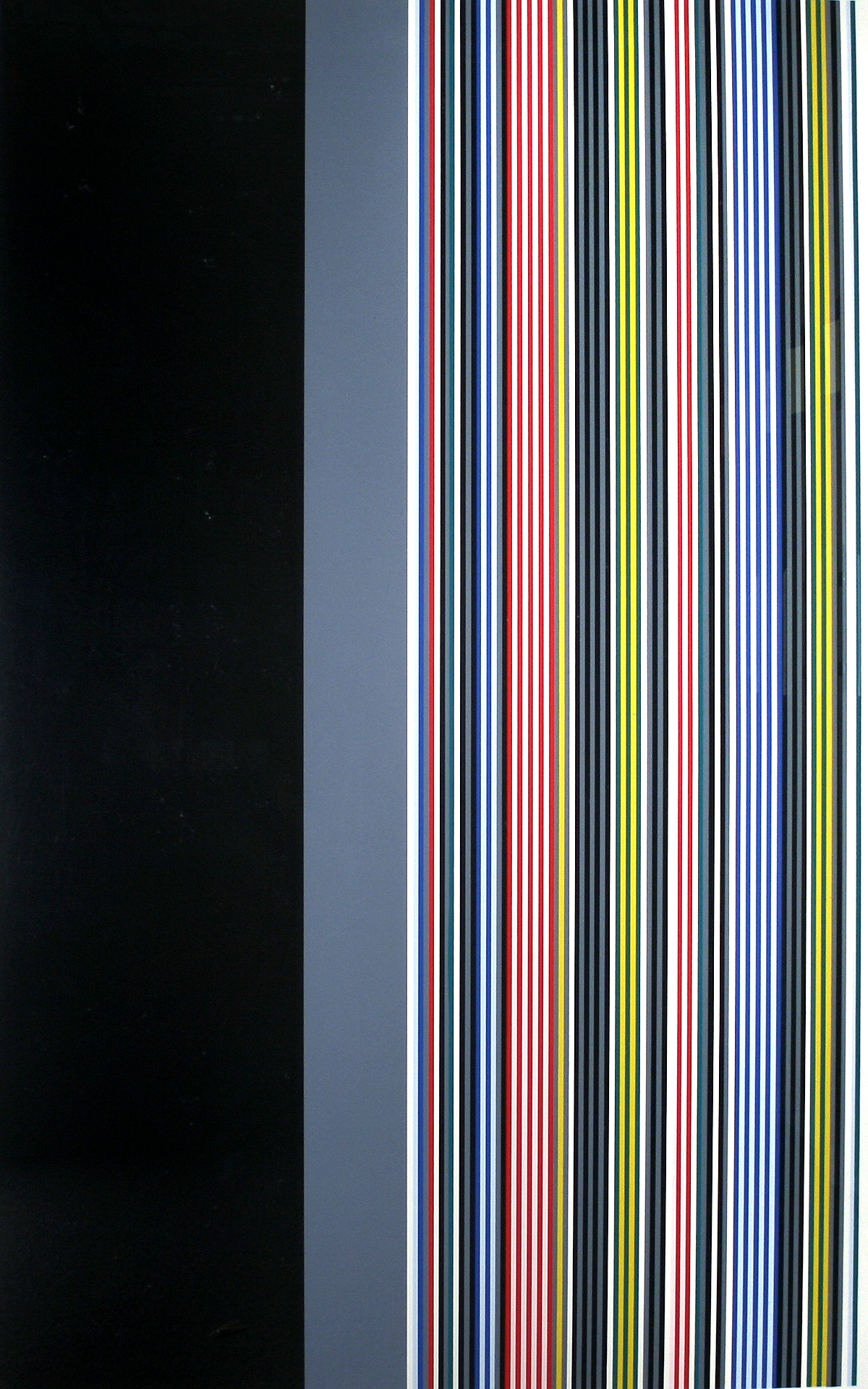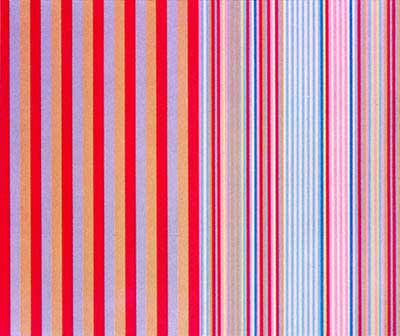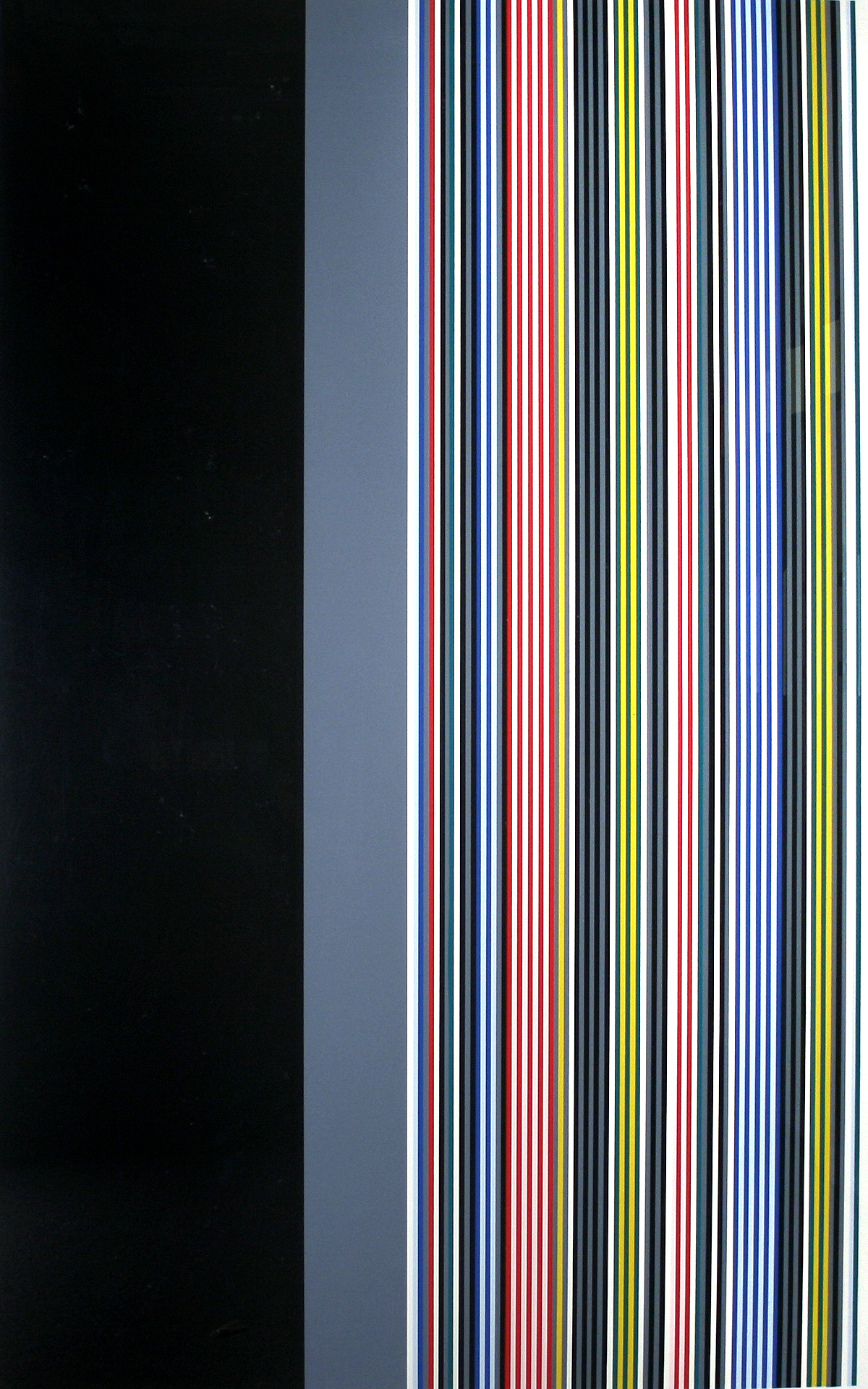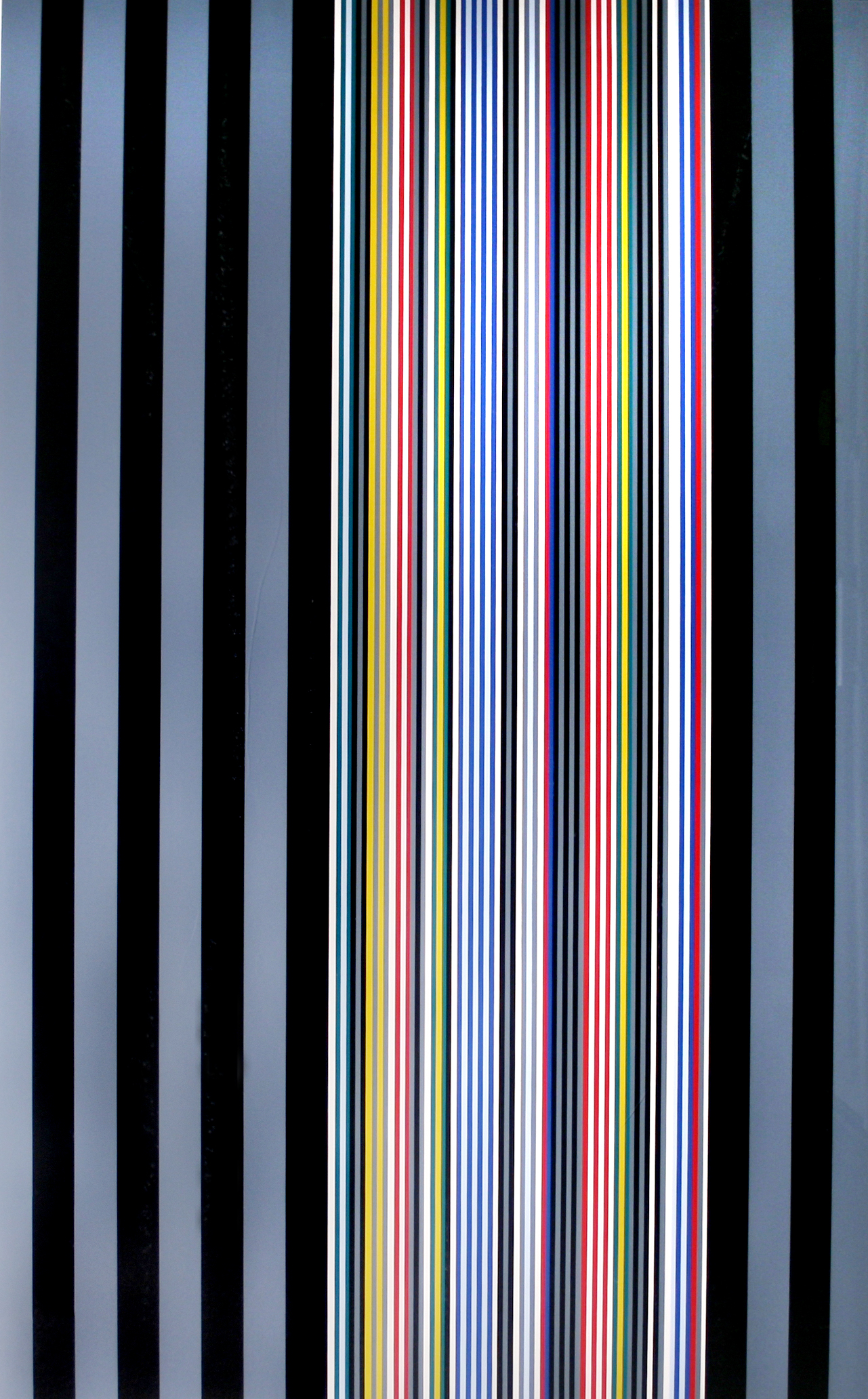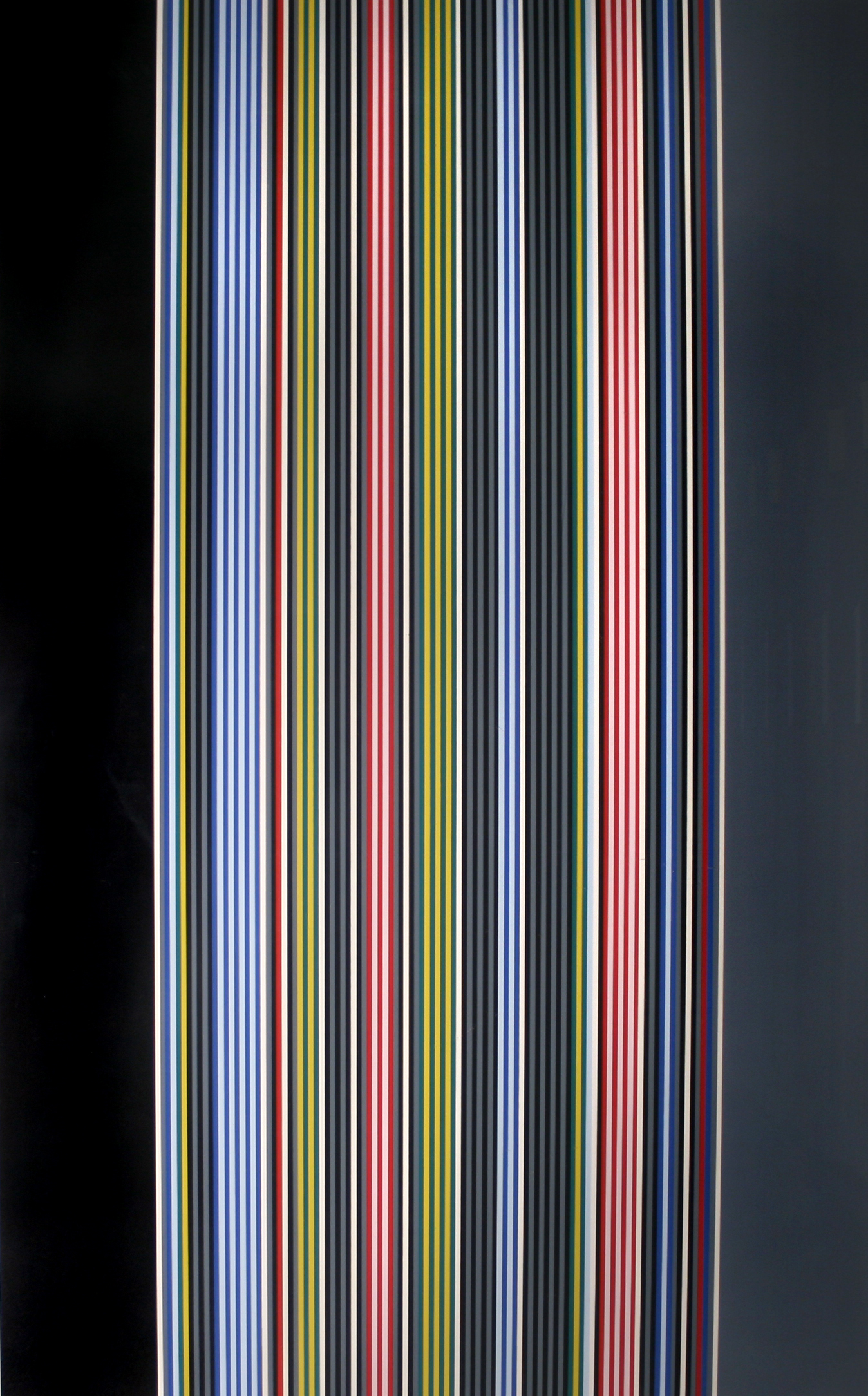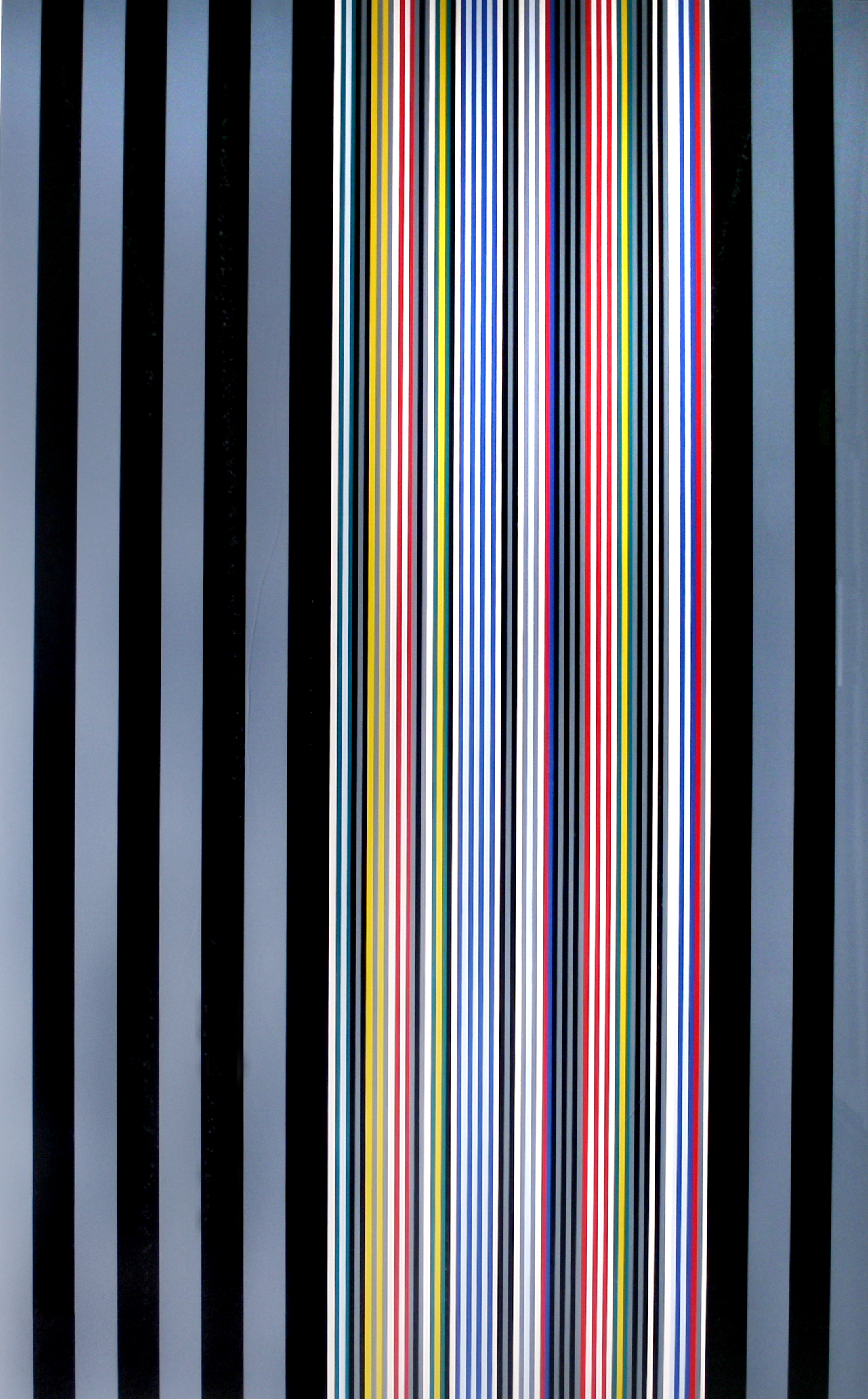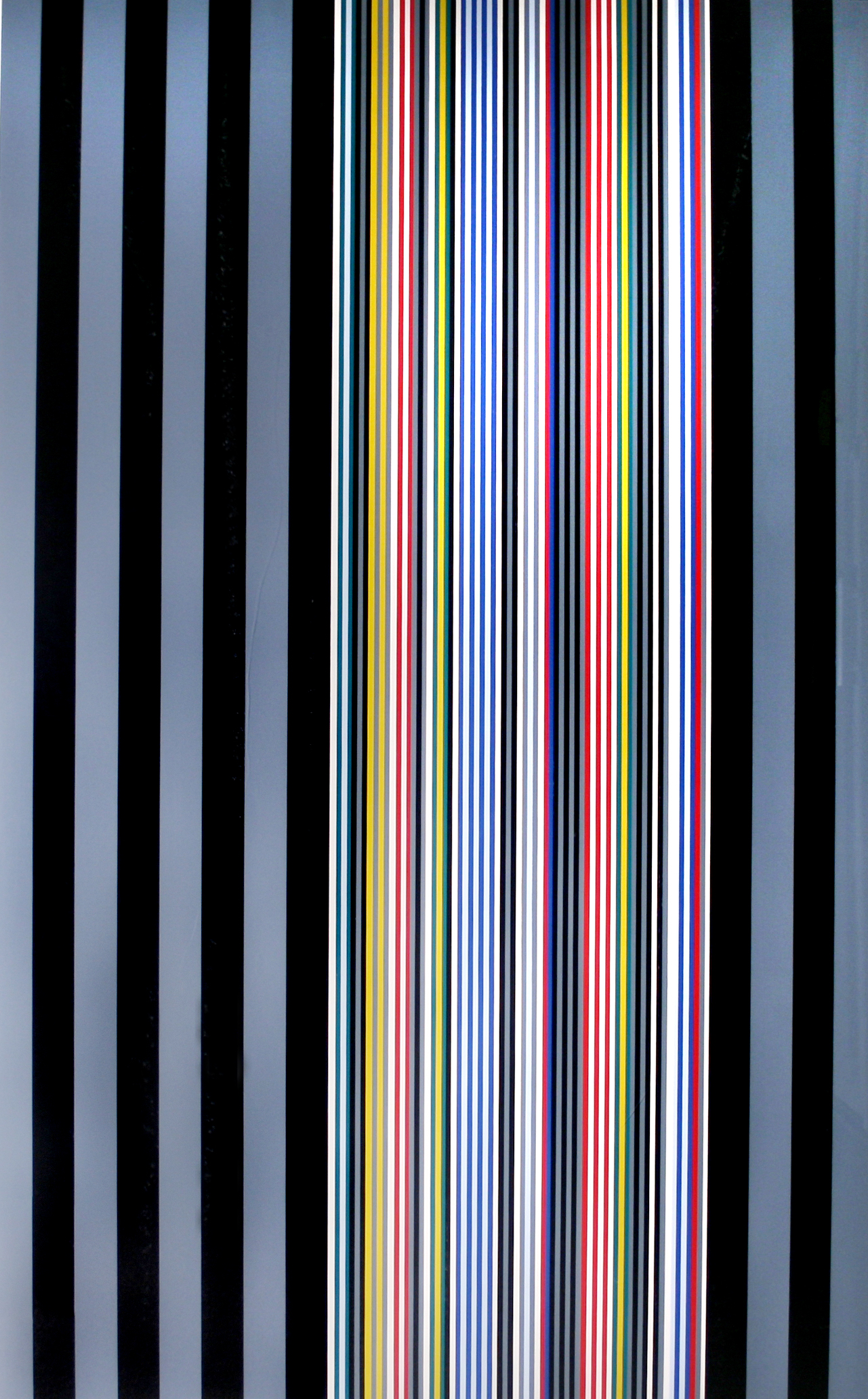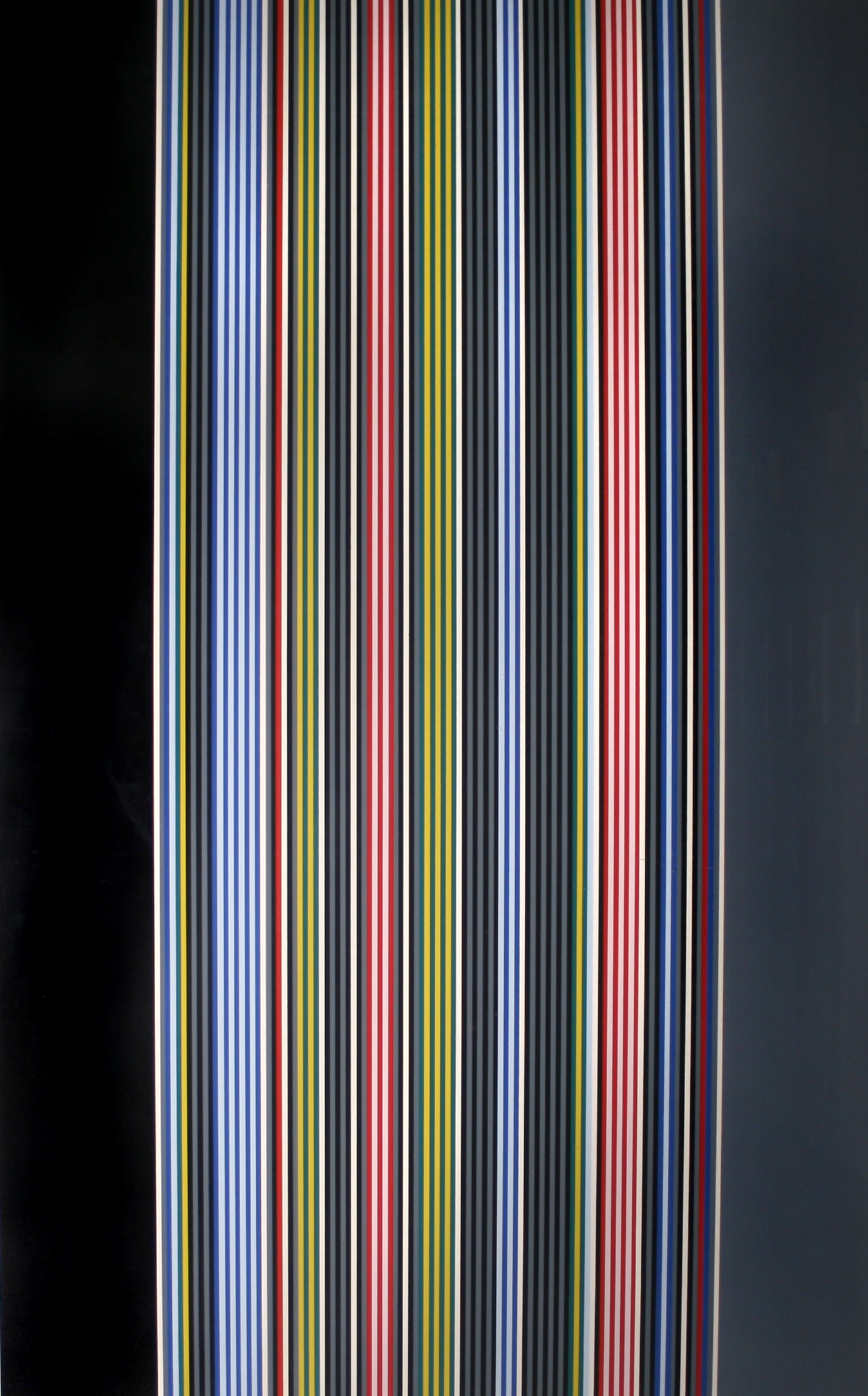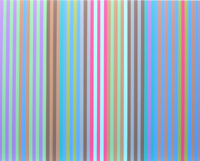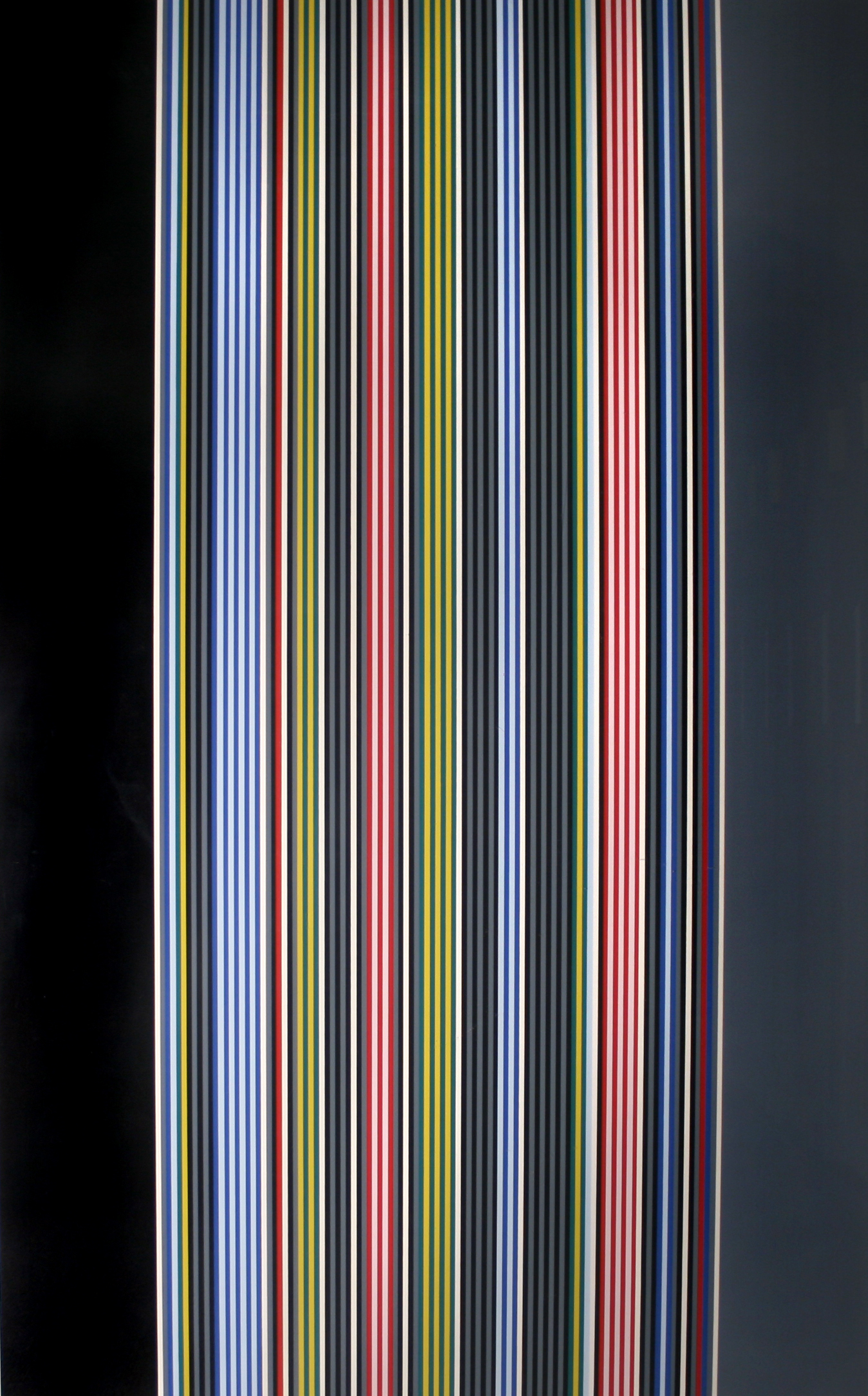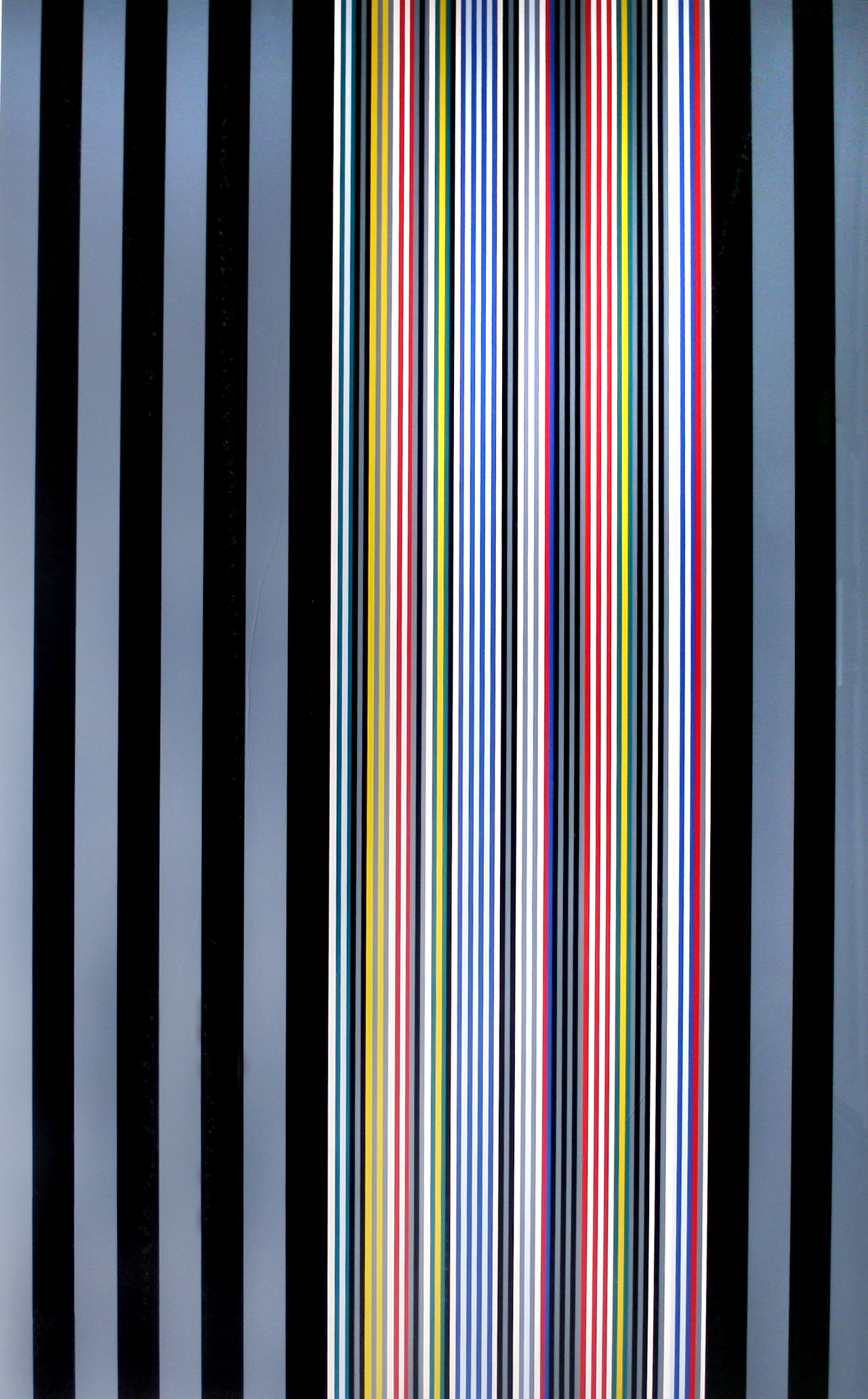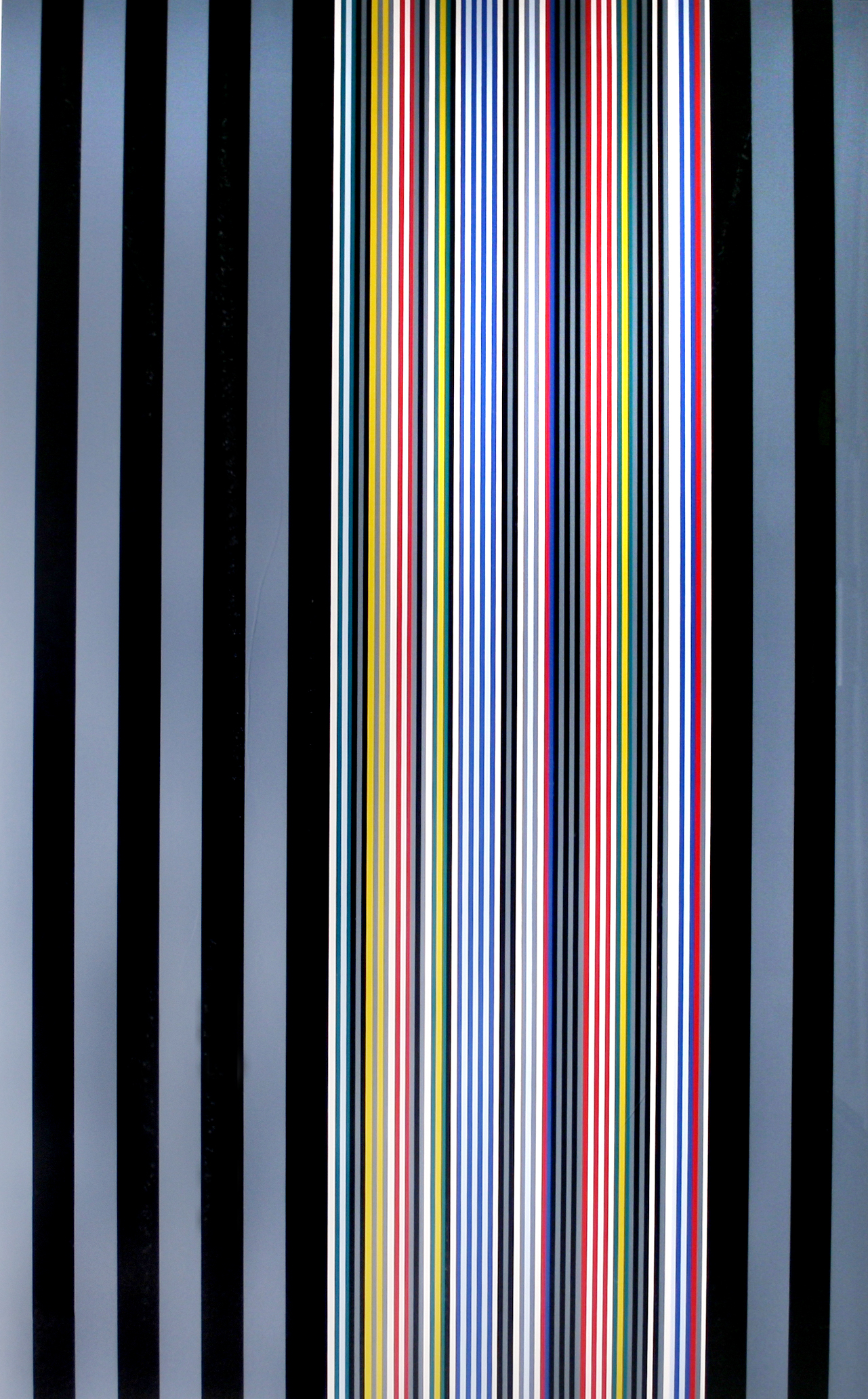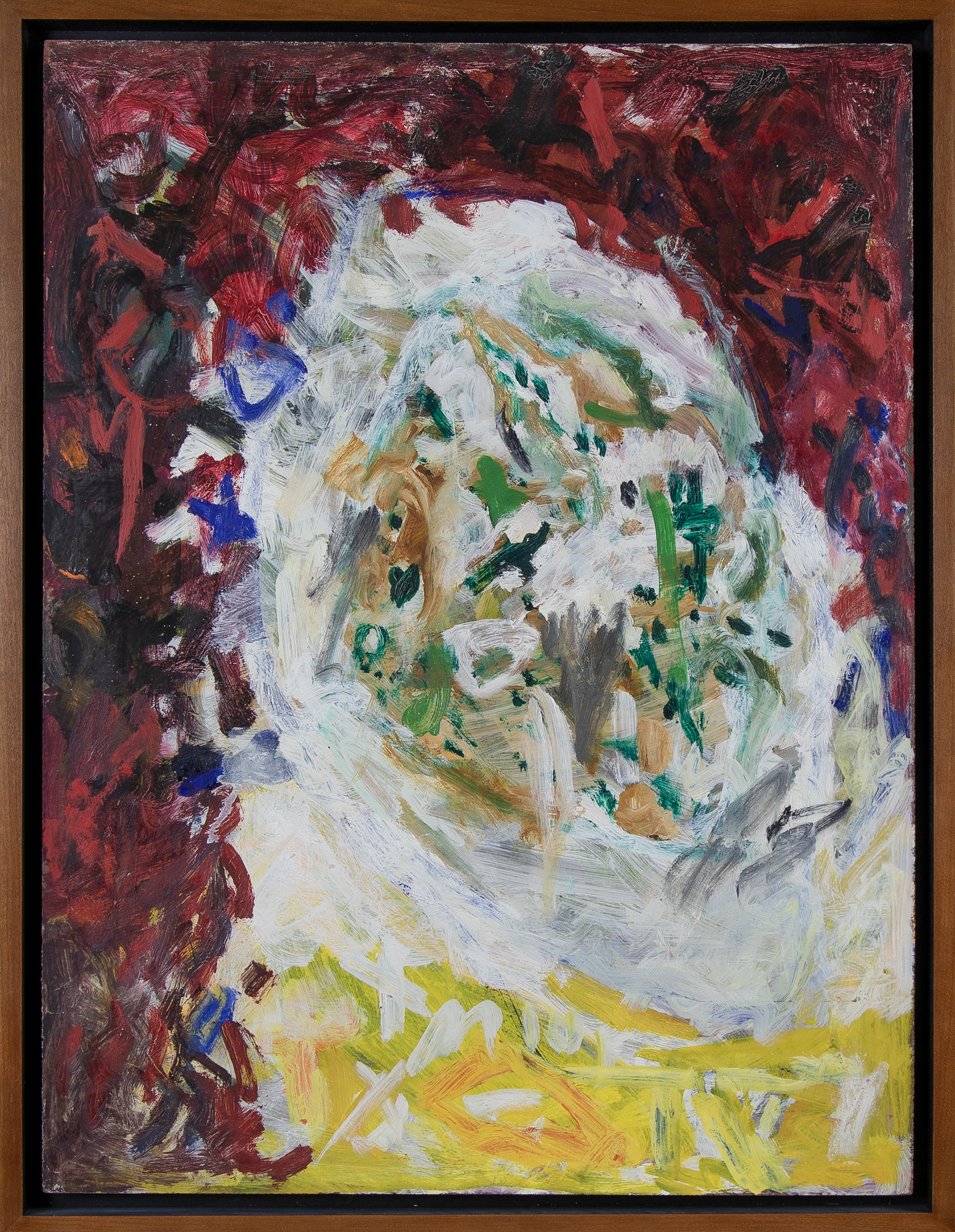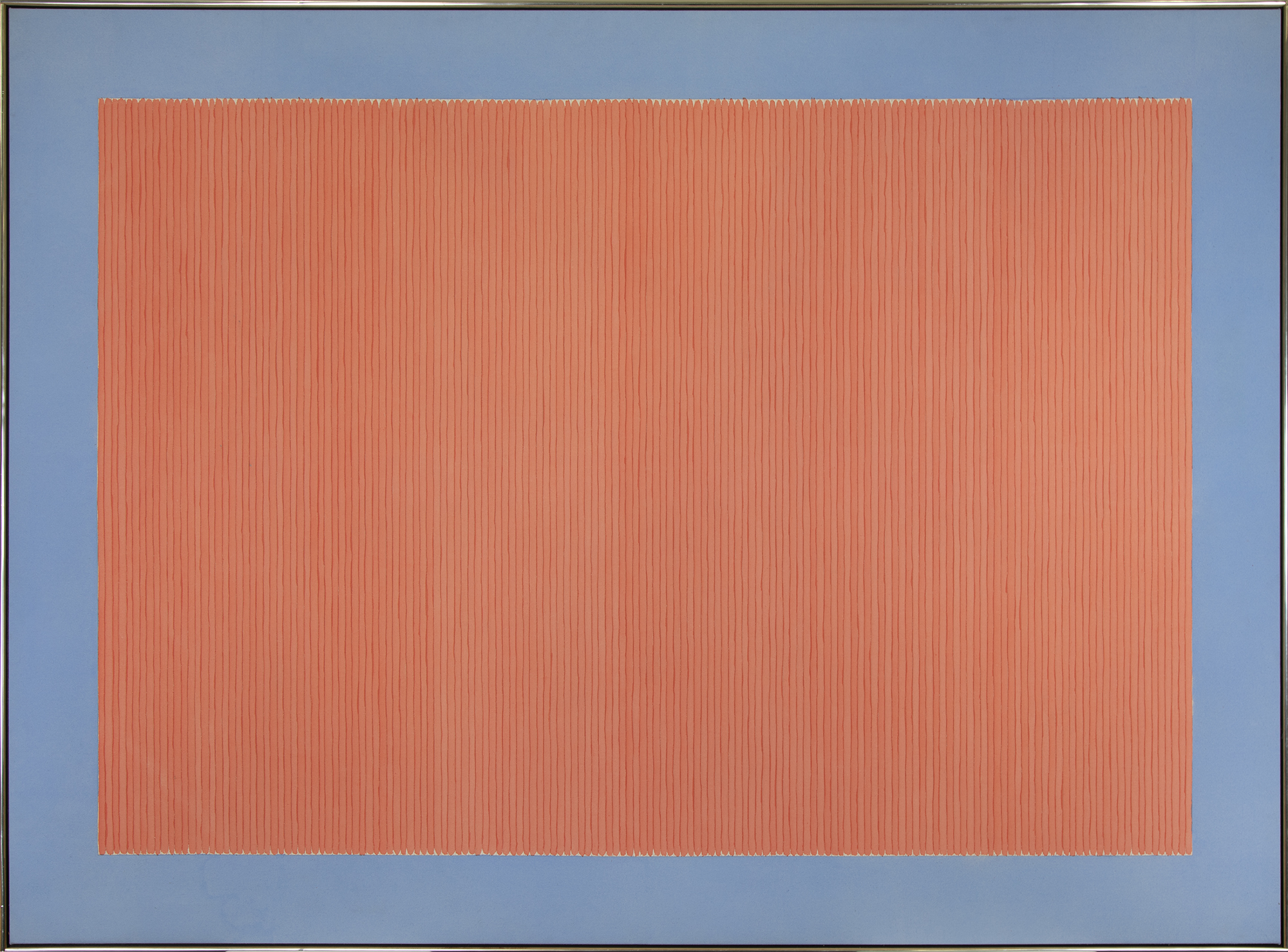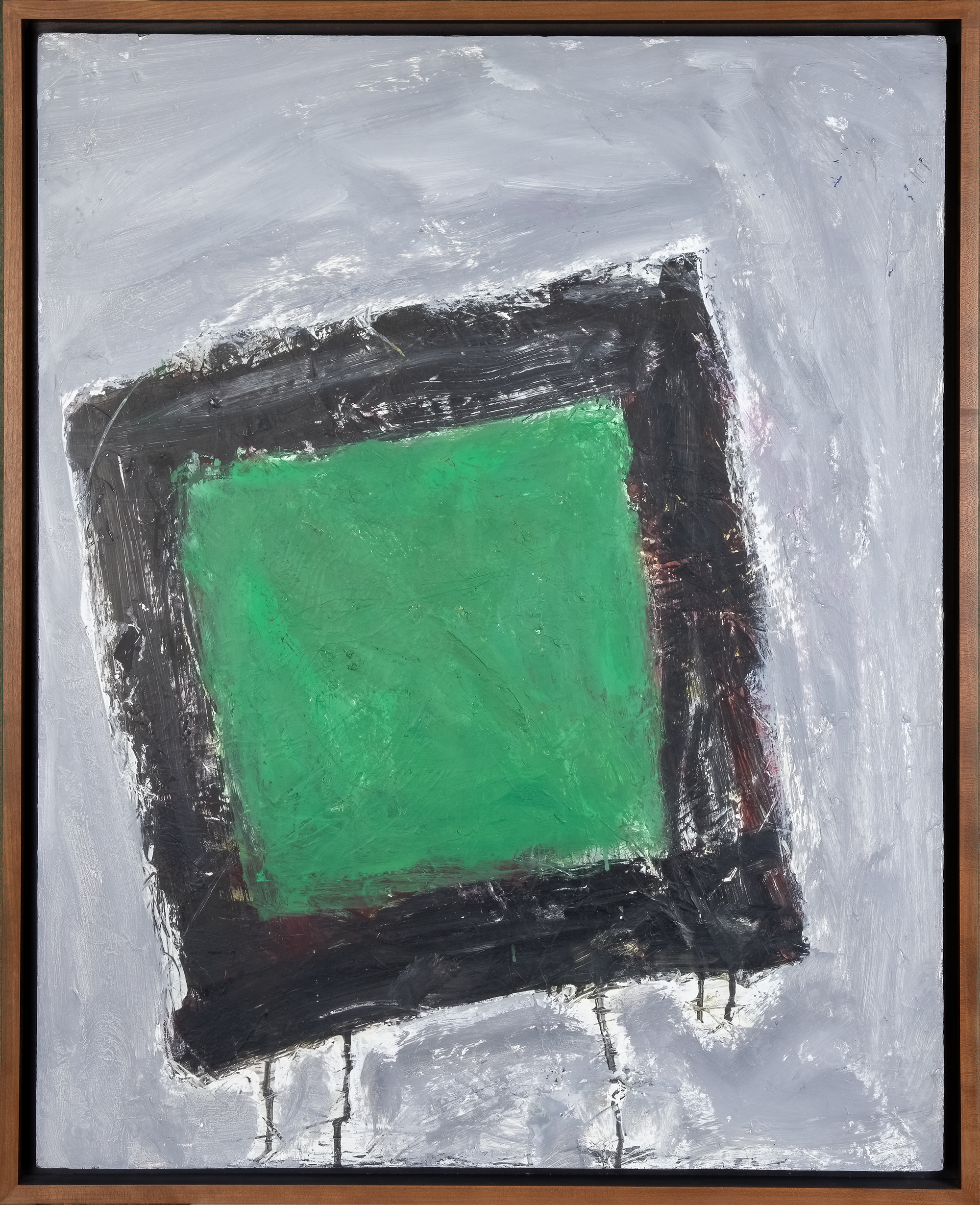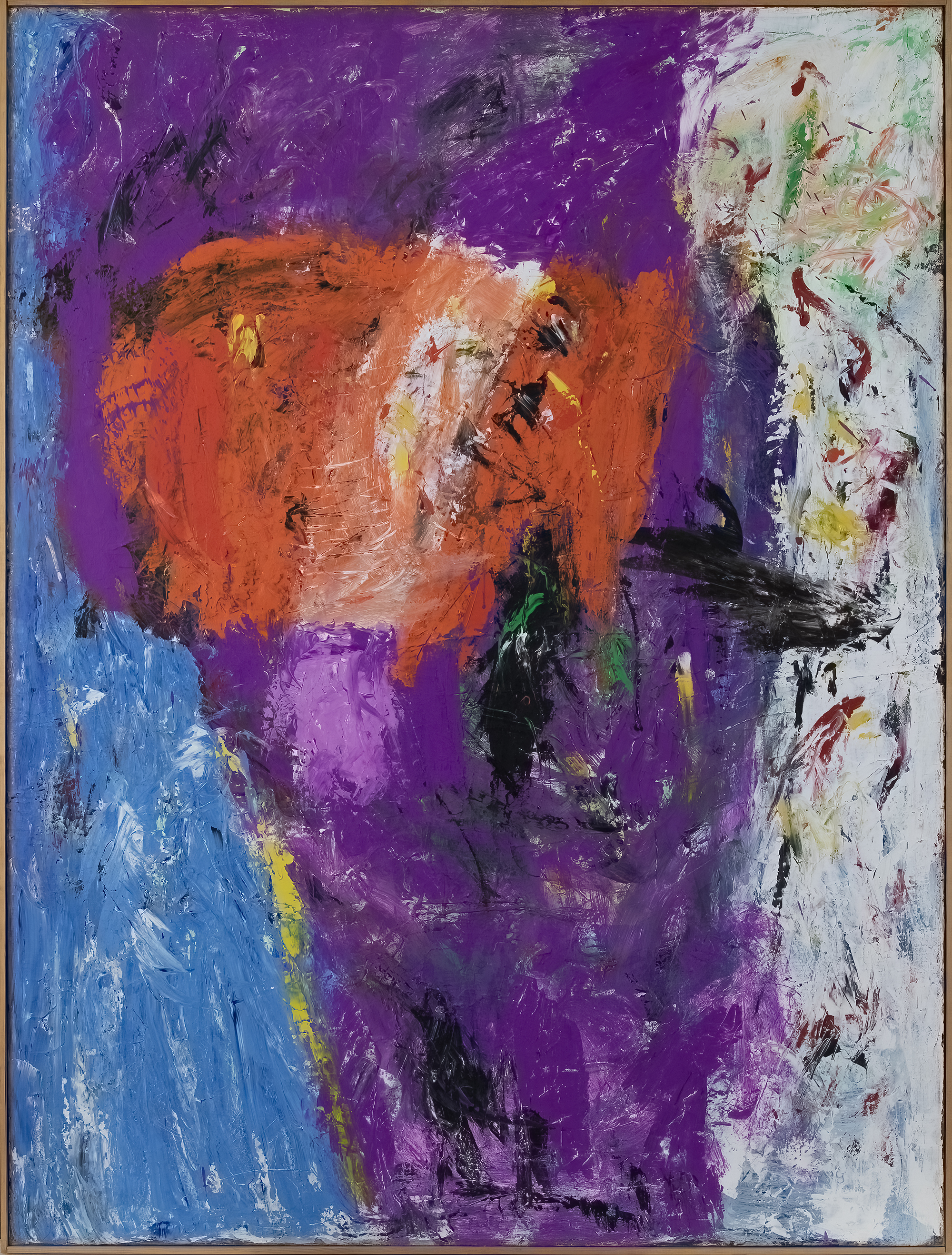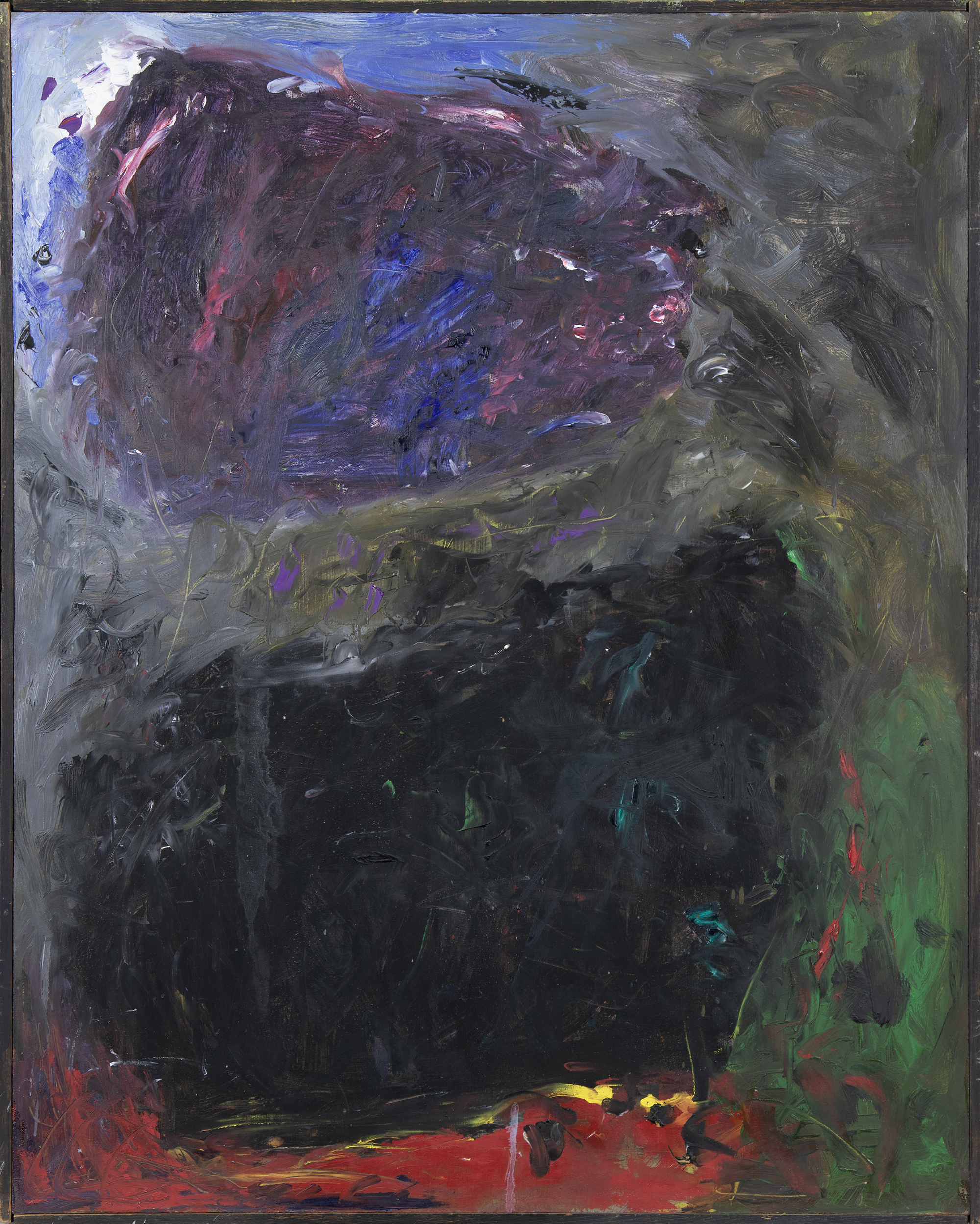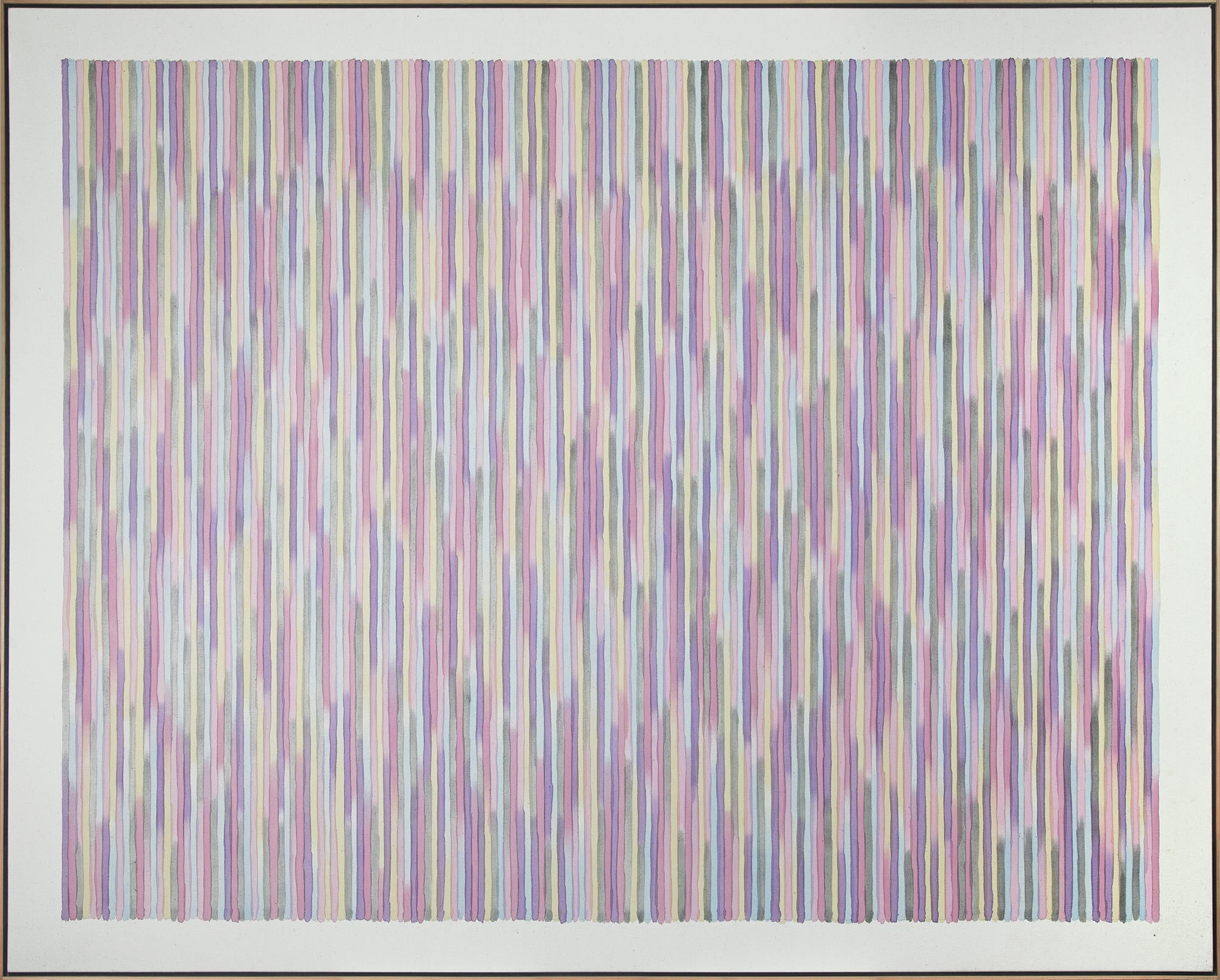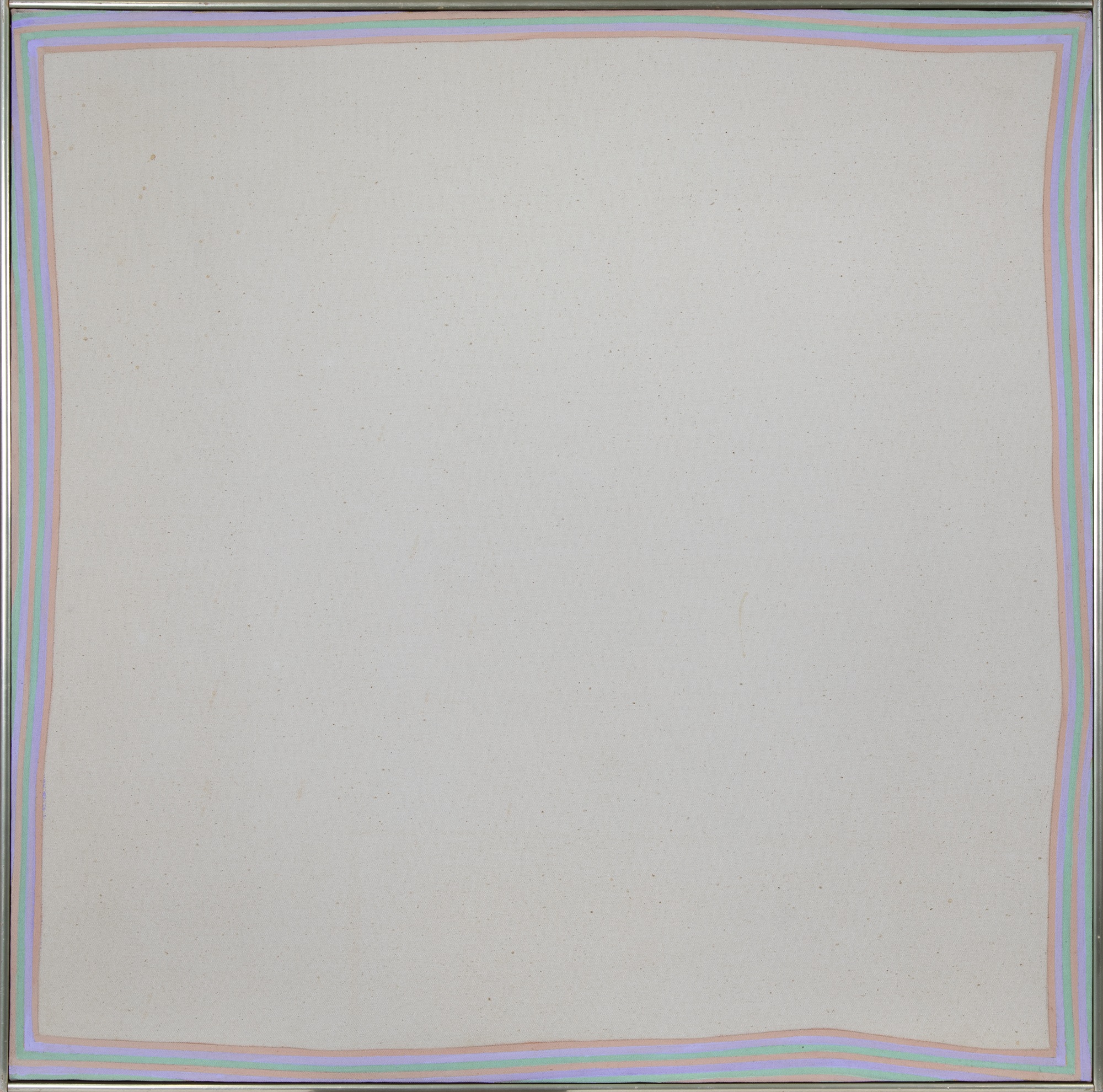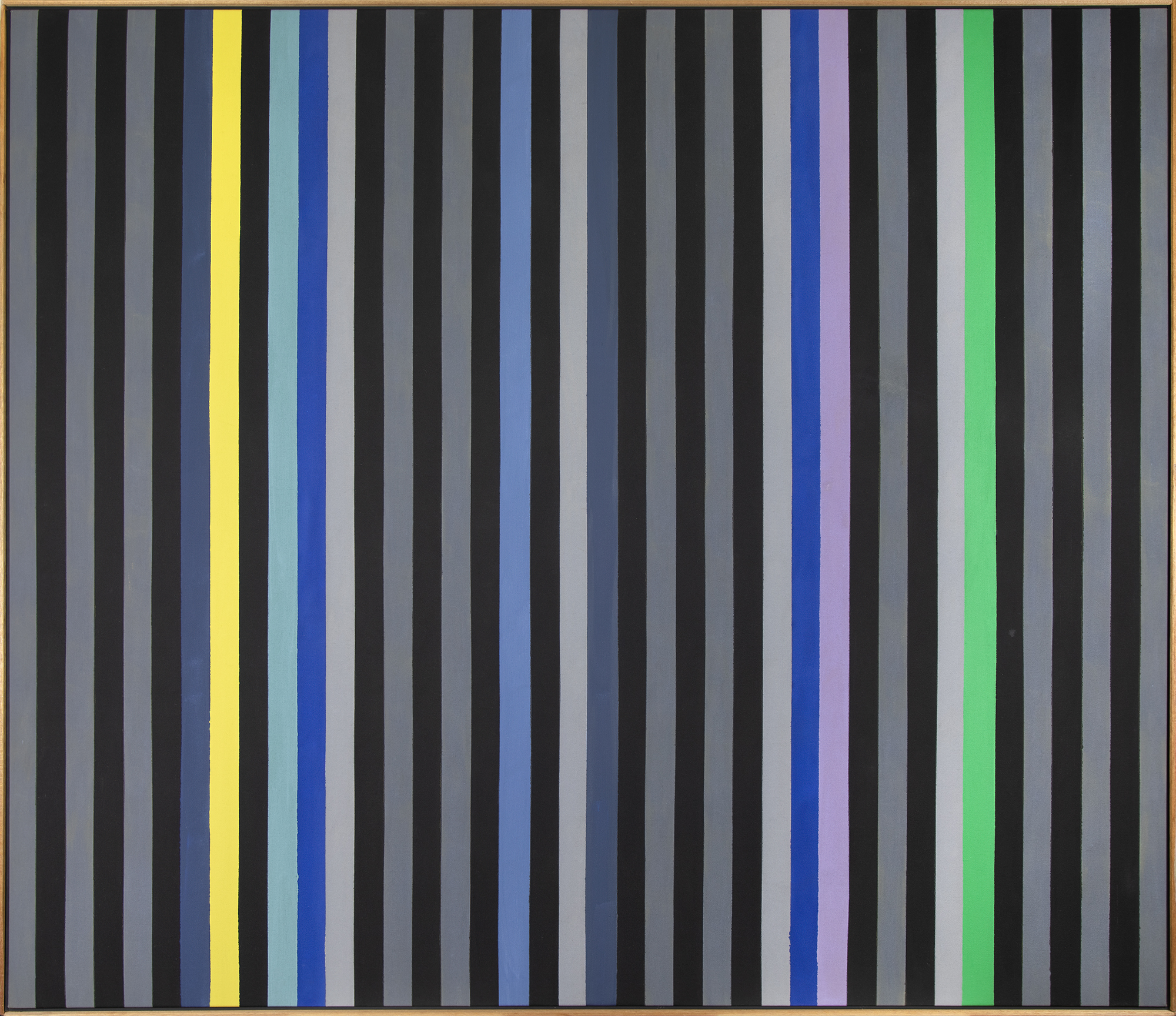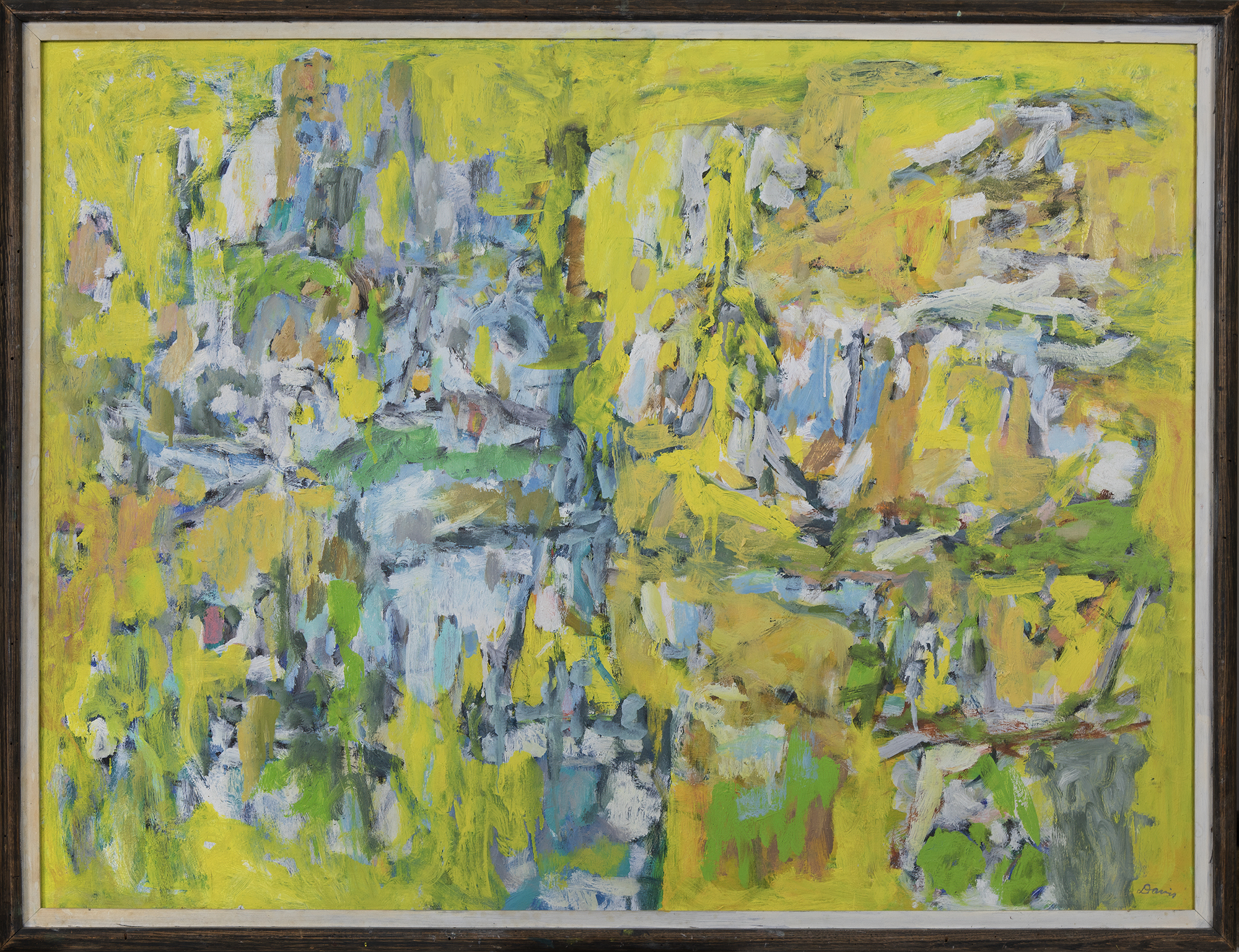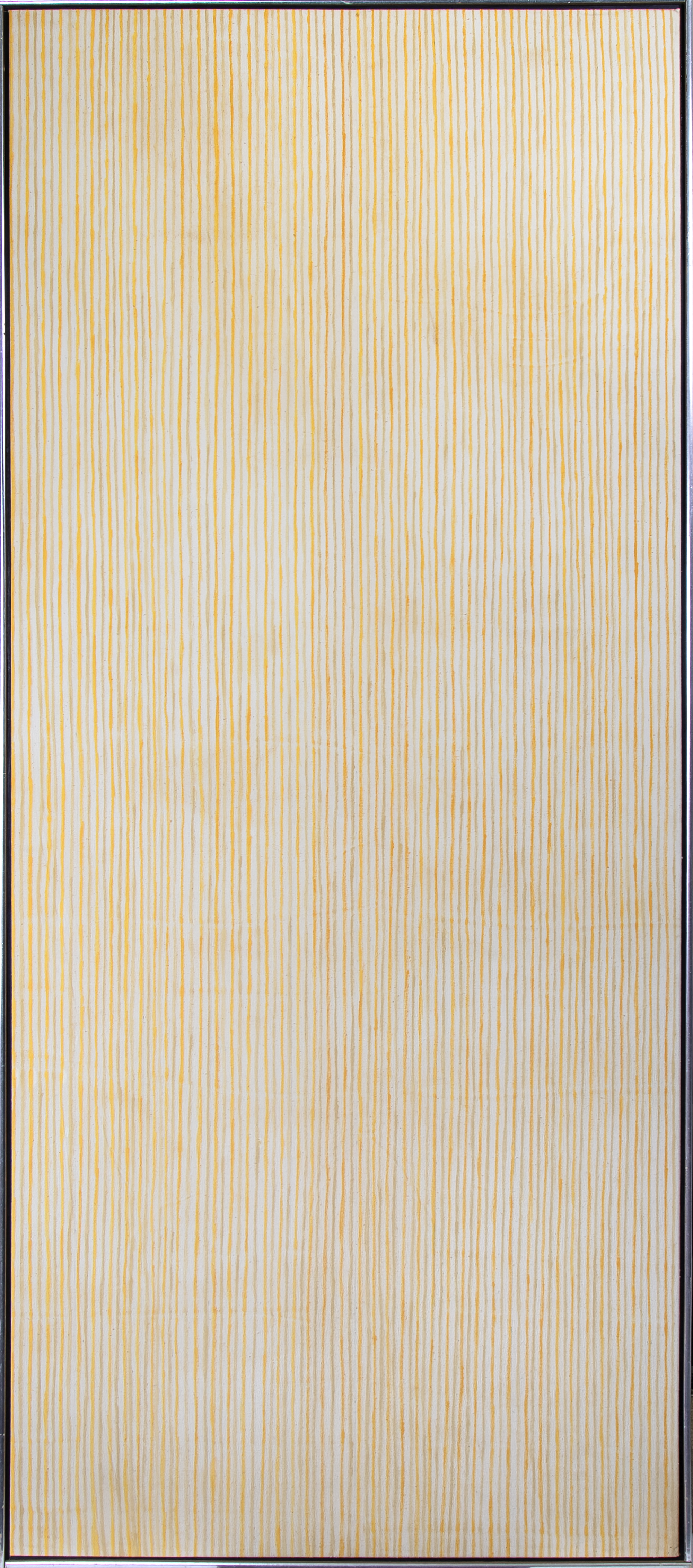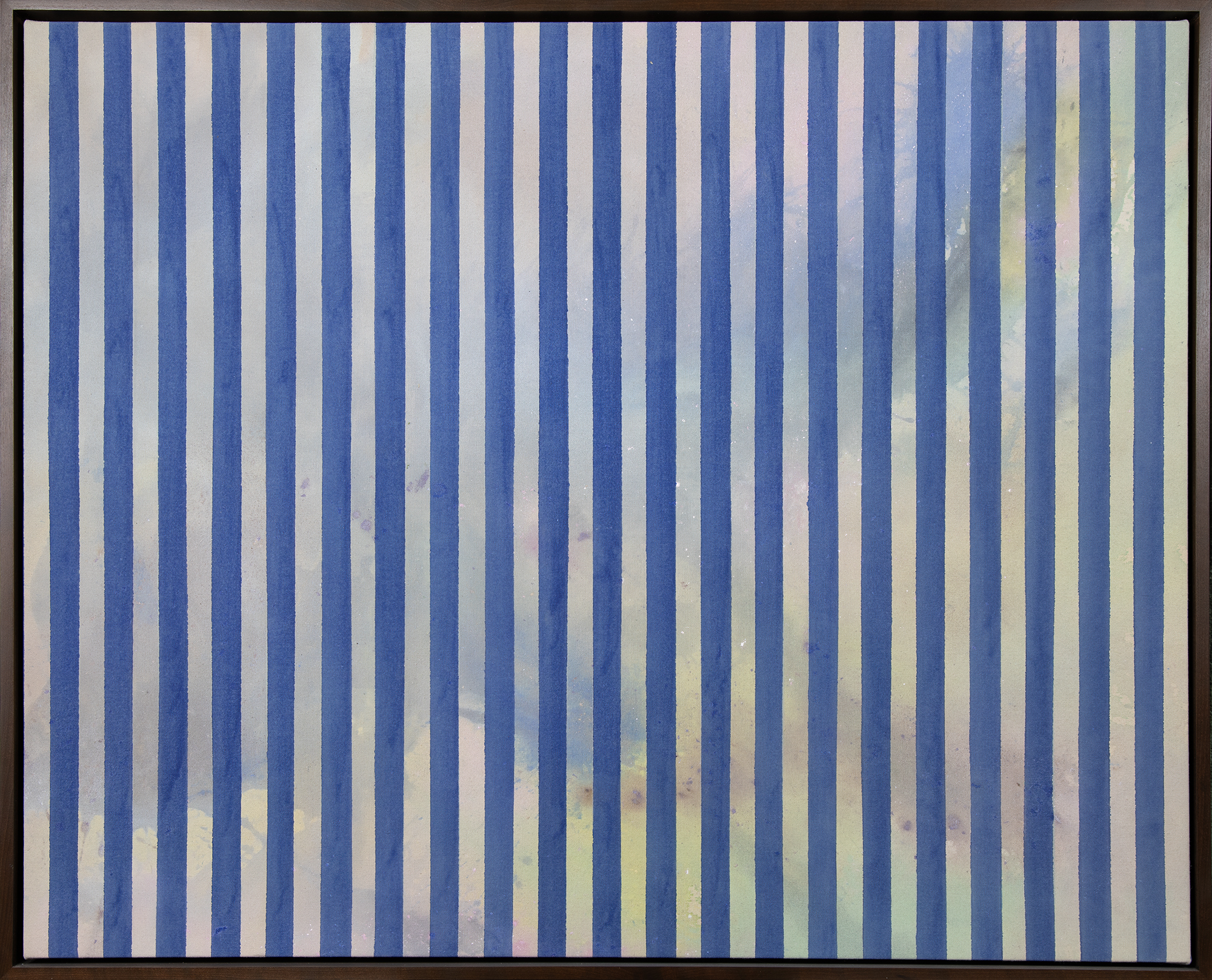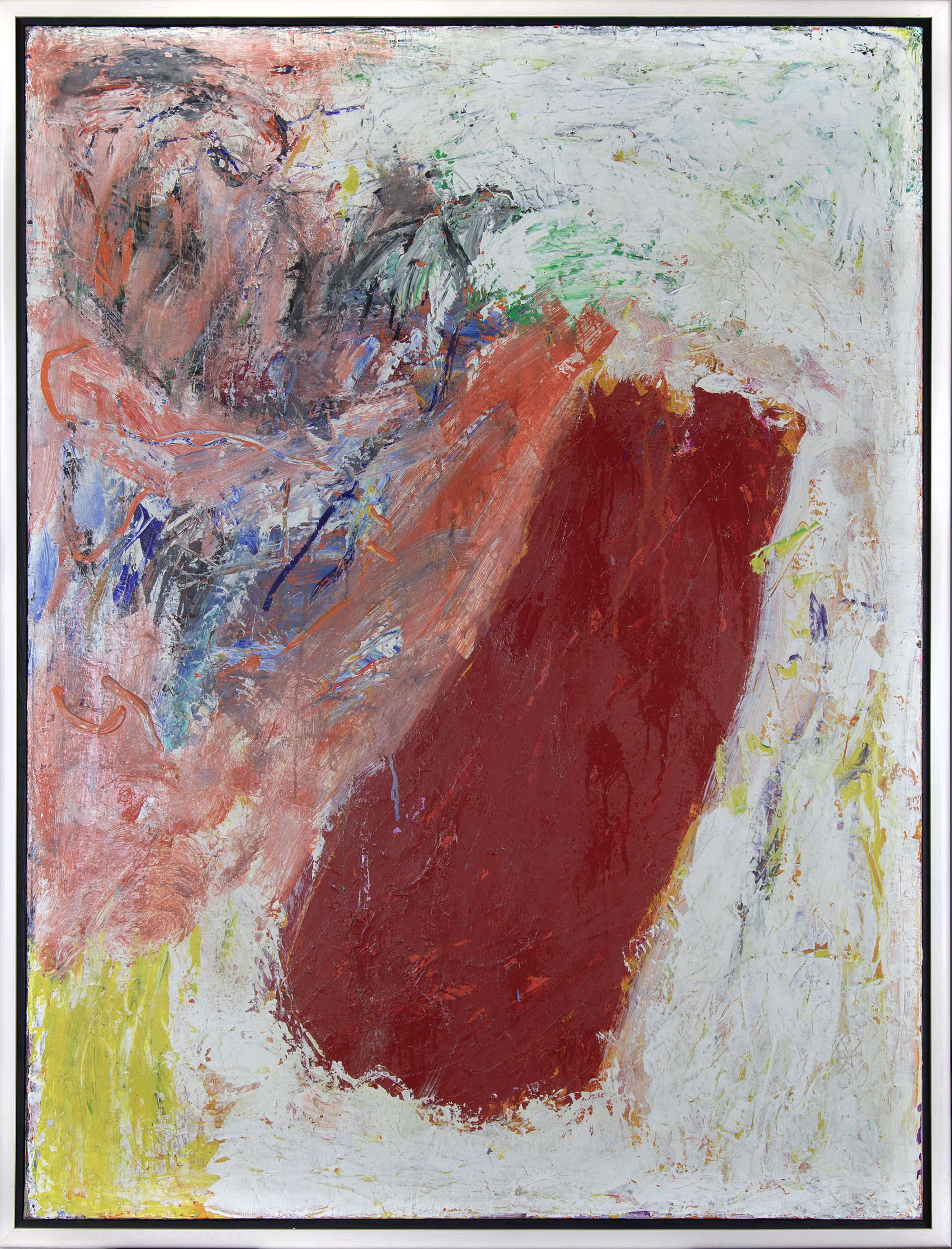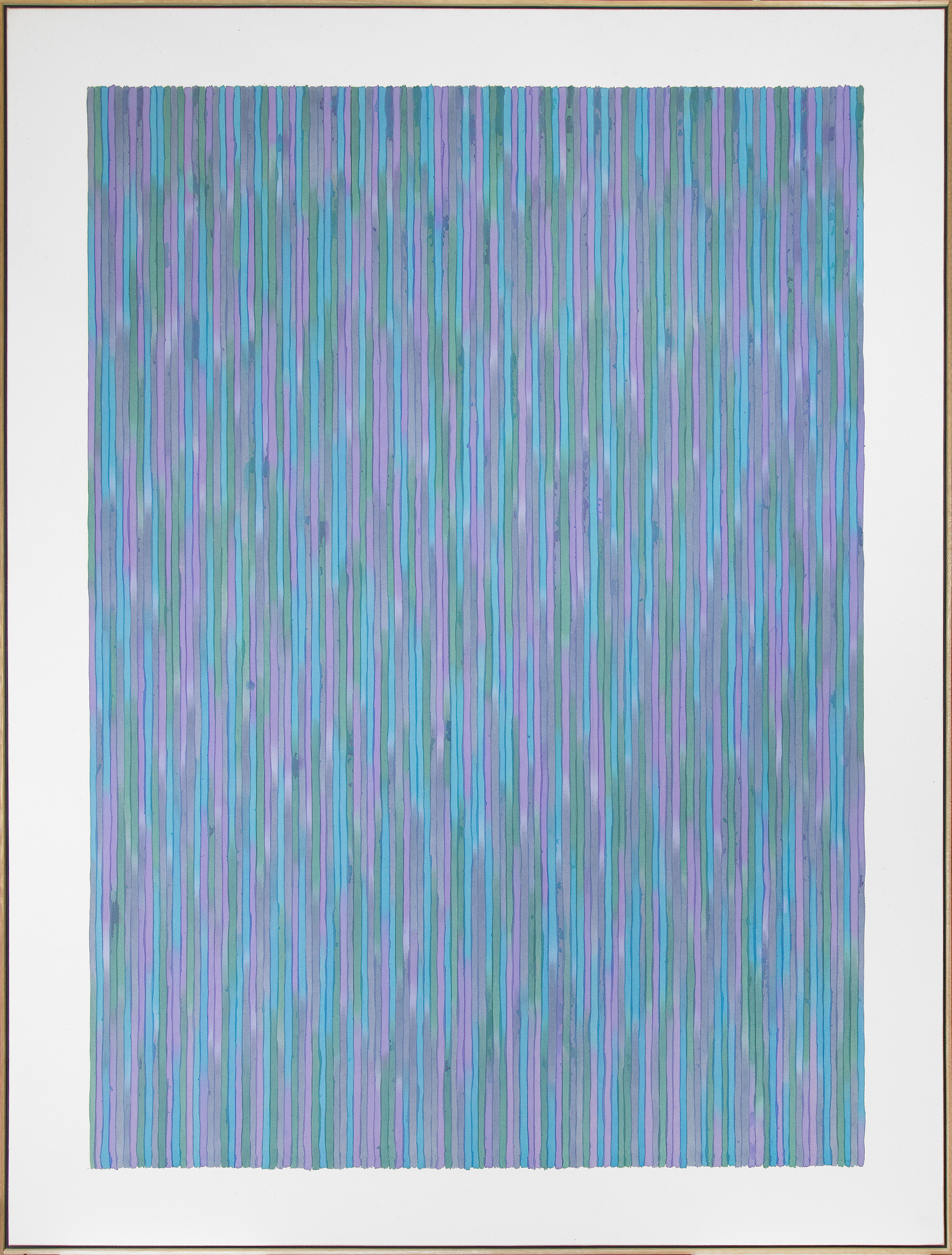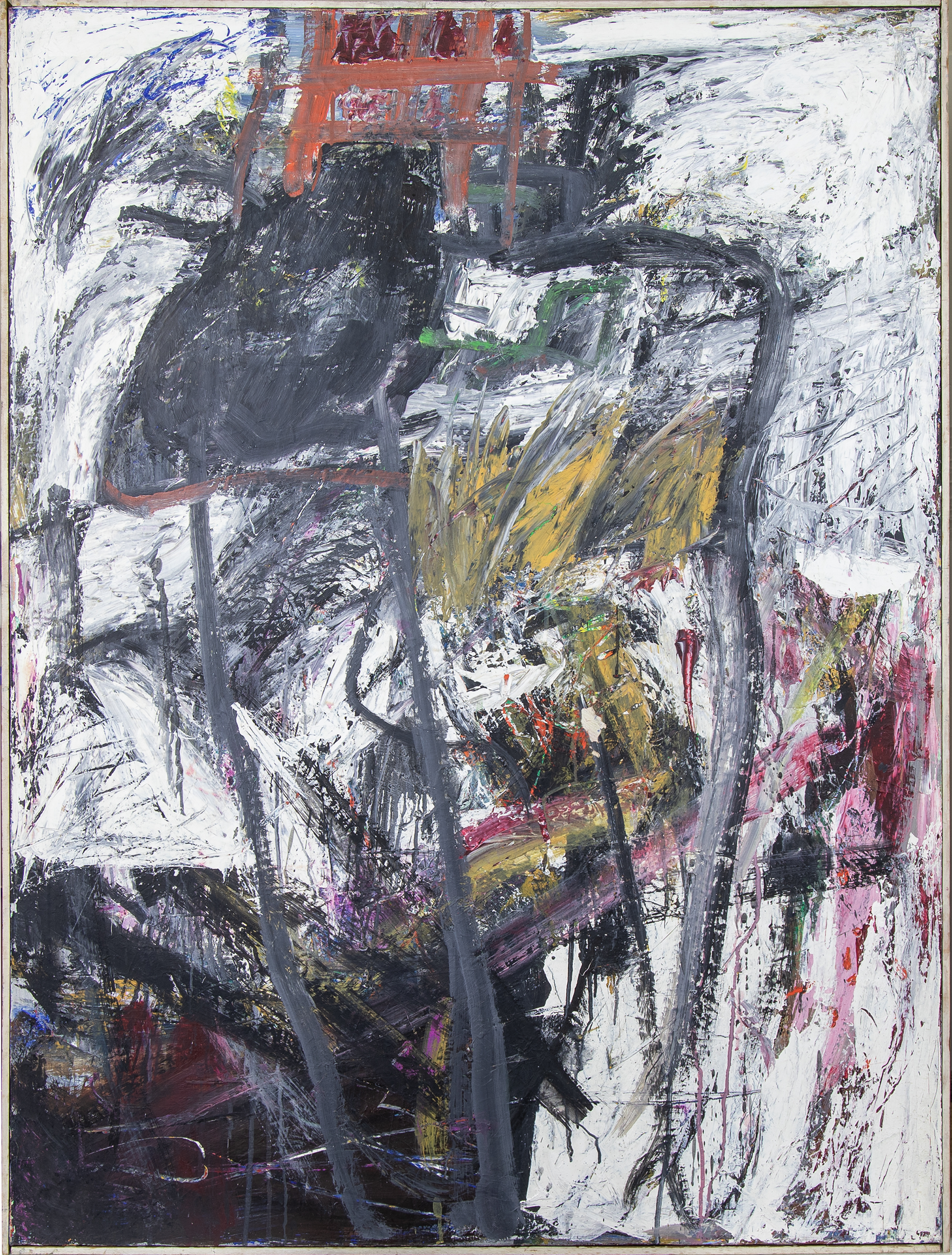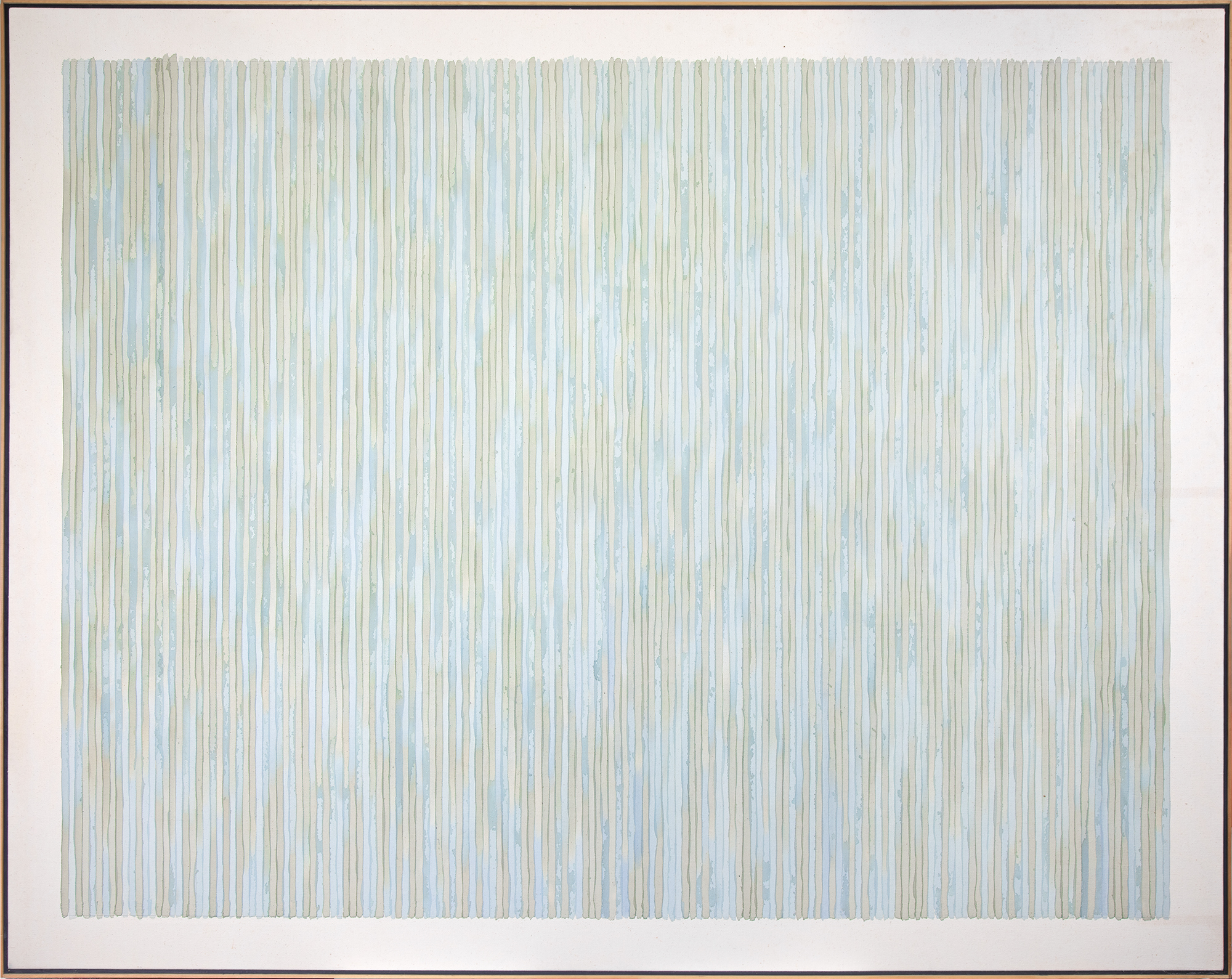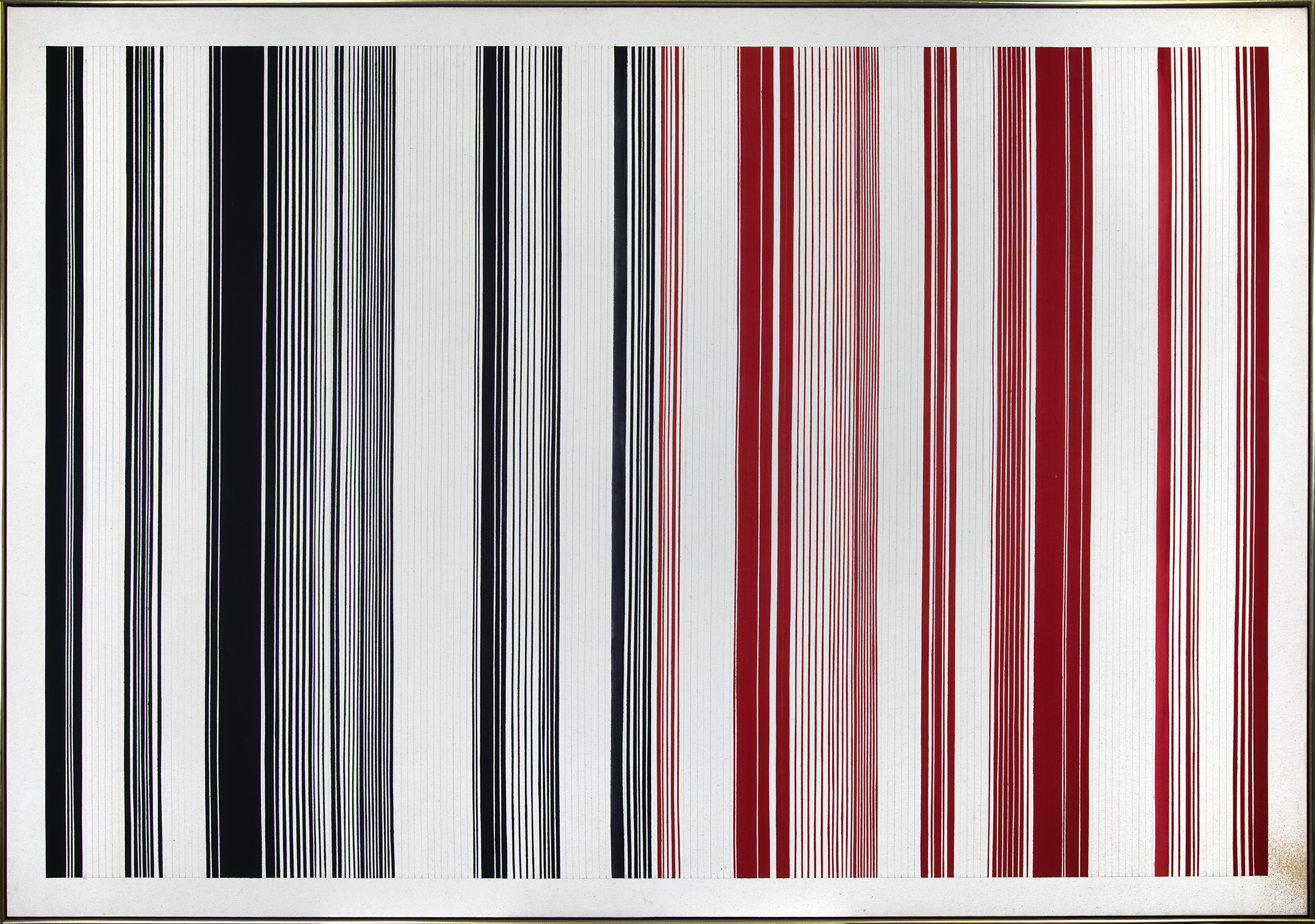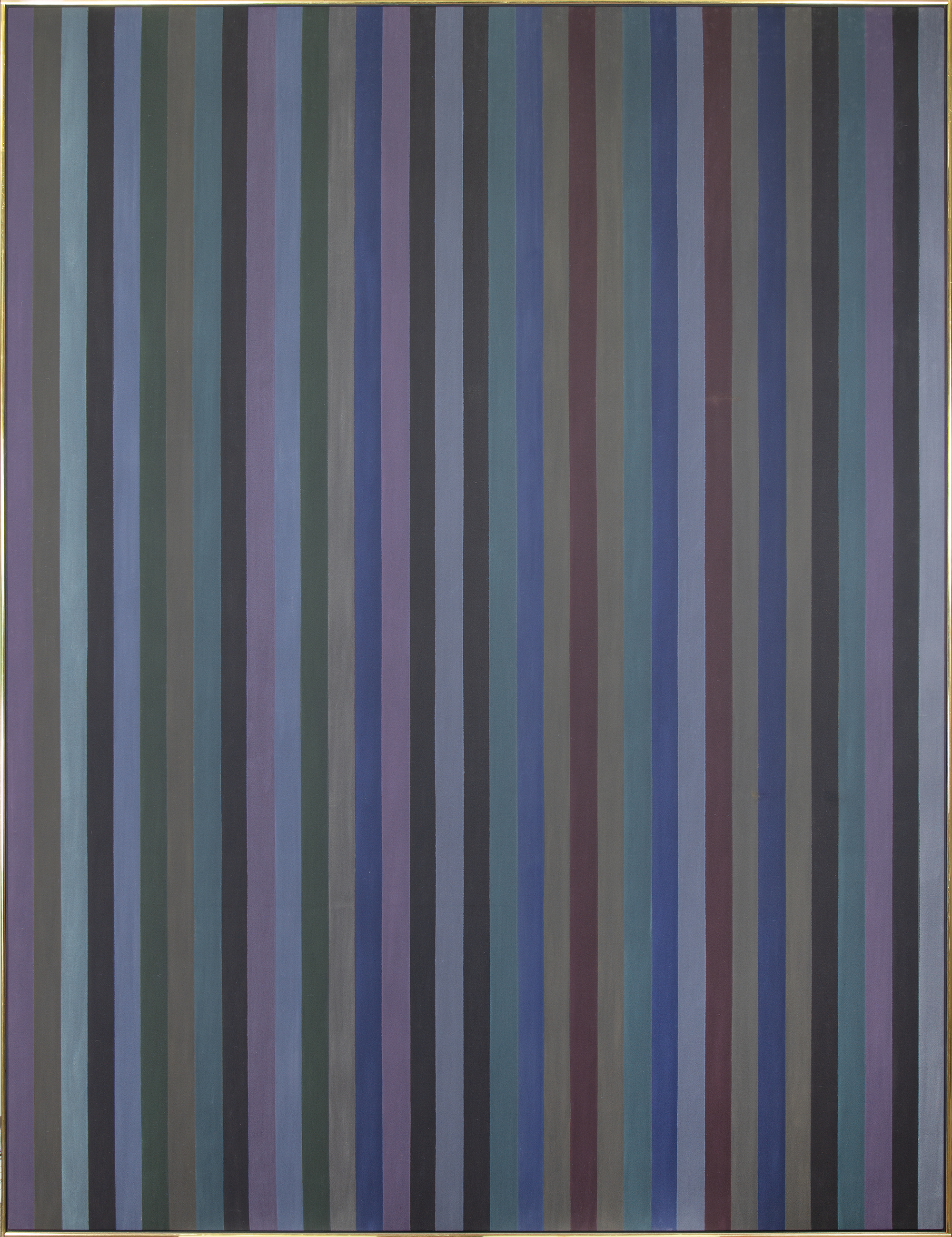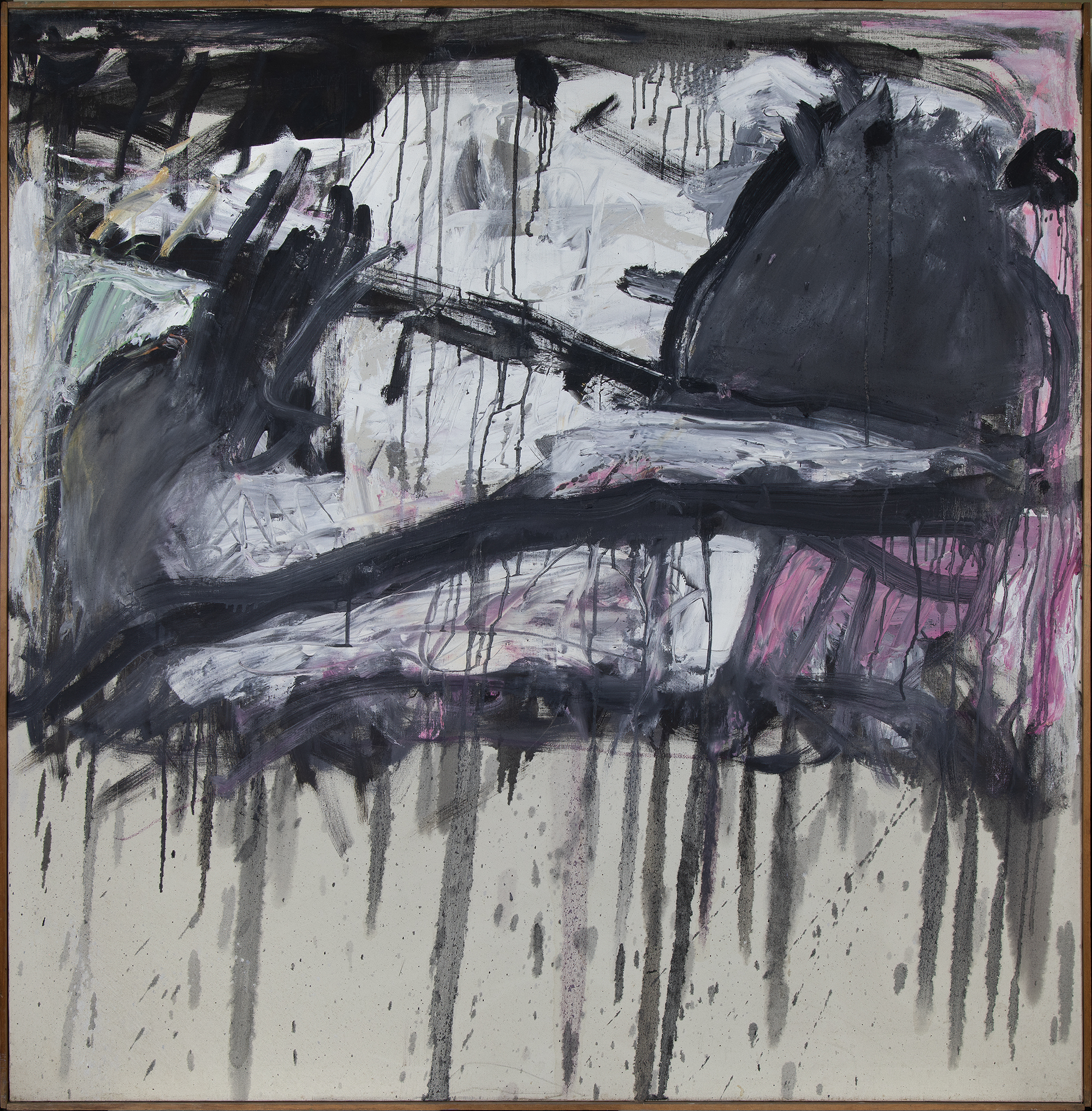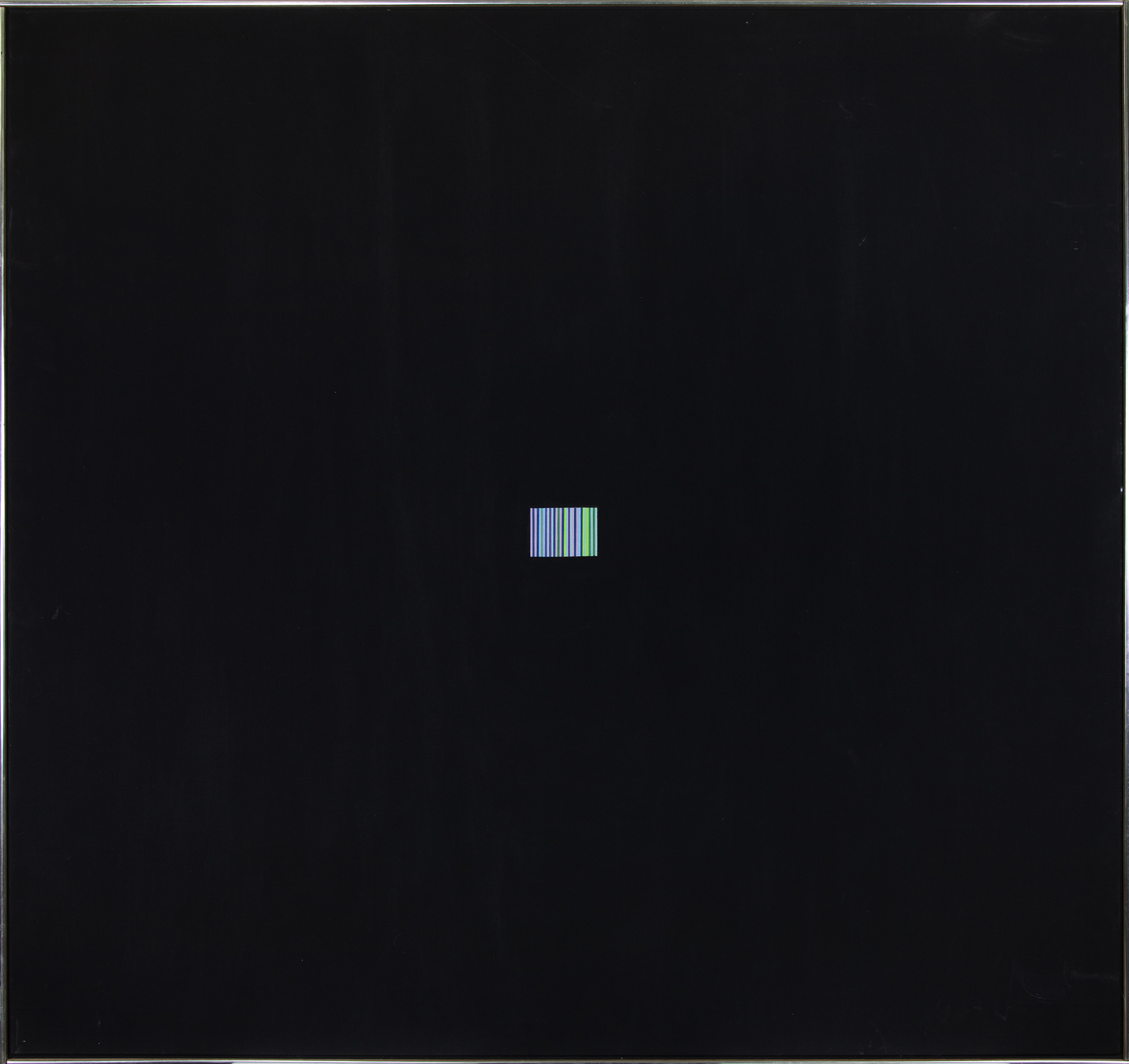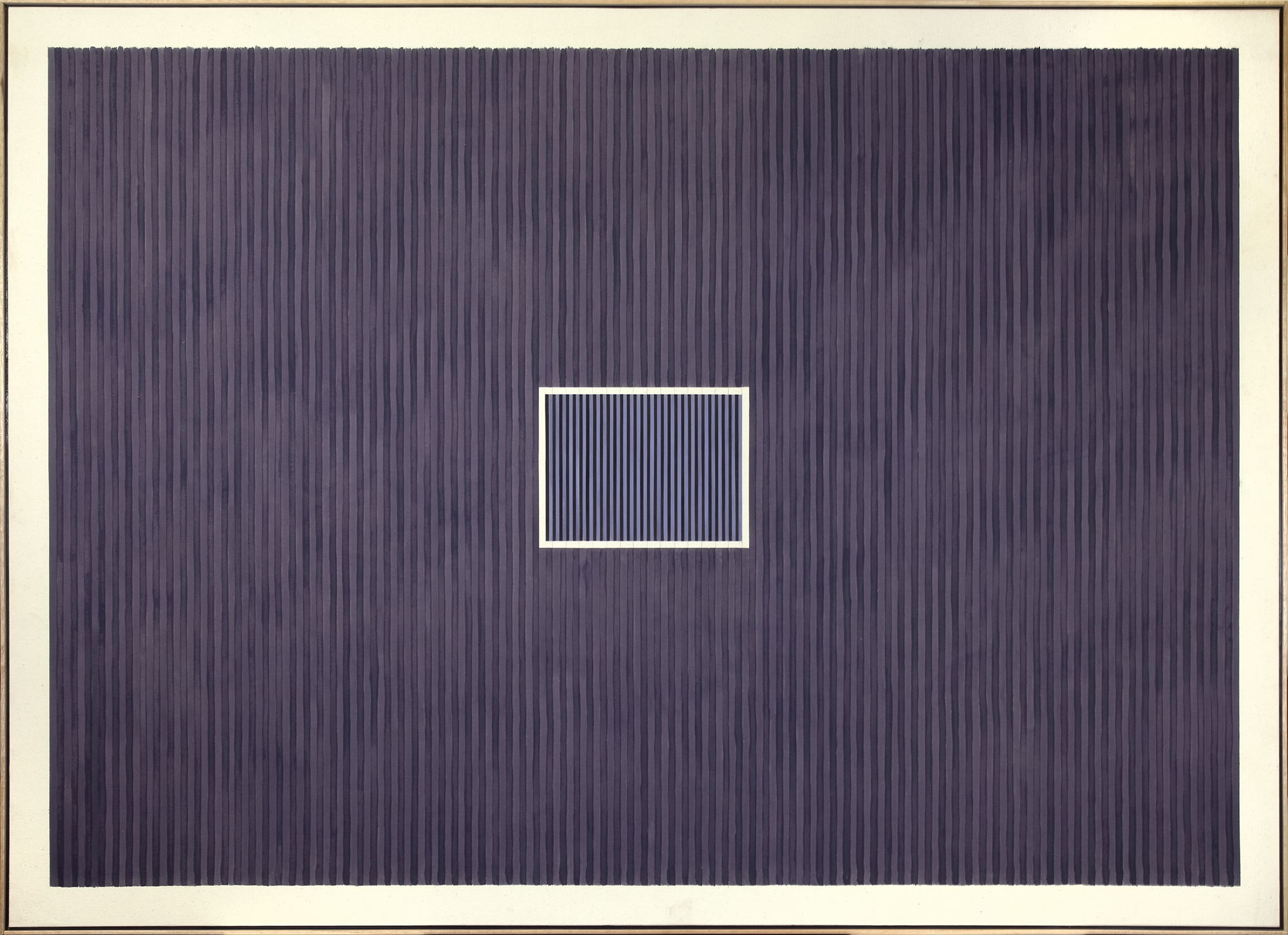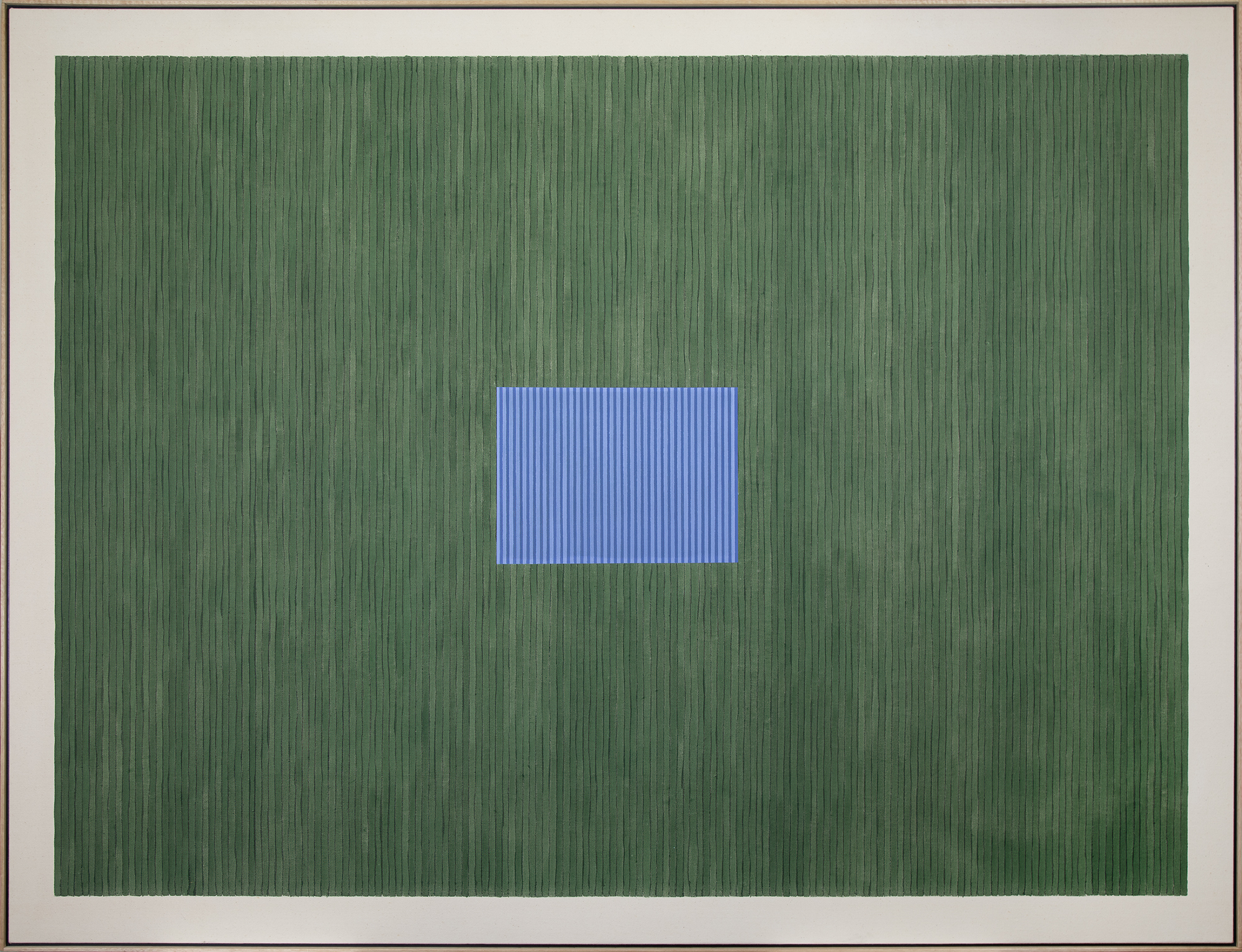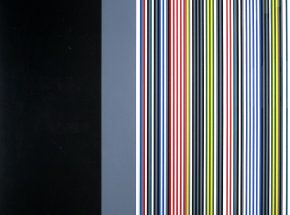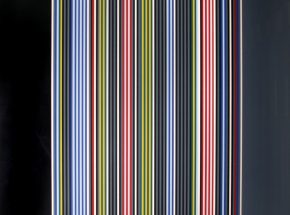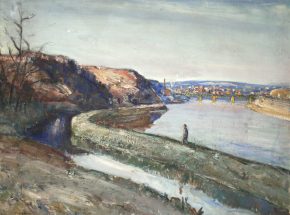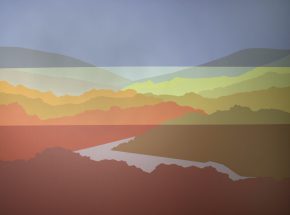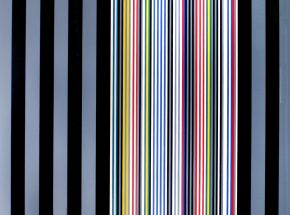





Self-taught artist Gene Davis was a central figure in the Washington Color School and is best known for his vertical stripe paintings, though he also worked in collage and silhouette self-portraits. Working with acrylic on canvas, he developed compositions of precisely calibrated bands of color that emphasize rhythm, optical variation, and chromatic interaction.
Davis often compared his painting process to jazz improvisation, describing it as “playing by eye.” He said, “Instead of simply glancing at the work, [I] select a specific color—and take the time to see how it operates across the painting. Enter the painting through the door of a single color, and then you can understand what my painting is all about.”
A lifelong resident of Washington, D.C., Davis helped establish the city as a center of contemporary art. Before turning to painting full time, he worked as a sportswriter and White House correspondent. His work is in several museum collections, notably the Walker Art Center, Minneapolis; the Solomon R. Guggenheim Museum, New York; and the Smithsonian American Art Museum, Washington, D.C.